
Troubleshooting Immunohistochemistry
If your immunohistochemistry is not working quite as expected, don’t fret. Check out this comprehensive guide to troubleshooting immunohistochemistry.
Join Us
Sign up for our feature-packed newsletter today to ensure you get the latest expert help and advice to level up your lab work.
Search below to delve into the Bitesize Bio archive. Here, you’ll find over two decades of the best articles, live events, podcasts, and resources, created by real experts and passionate mentors, to help you improve as a bioscientist. Whether you’re looking to learn something new or dig deep into a topic, you’ll find trustworthy, human-crafted content that’s ready to inspire and guide you.

If your immunohistochemistry is not working quite as expected, don’t fret. Check out this comprehensive guide to troubleshooting immunohistochemistry.

Have you ever wished you could transfer the same SDS-PAGE gel twice? Sometimes, when you are blotting for many different proteins of similar size, stripping and reprobing multiple times can become impractical. Here’s a simple diffusion transfer method that can be used to generate duplicate membranes from a single gel: Protein transfer by this diffusion…

Phosphorylation is one of the major post-translational modifications that regulate the activity of a protein. Around a third of human proteins are believed to be phosphorylated, and so the kinases and phosphatases that mediate protein phosphorylation are of major interest to biomedical researchers. However detecting protein phosphorylation can be difficult, particularly from cell extracts. Phospho-specific…

This column is loaded with pop quizzes for you to test yourself on. If you haven’t already done so, catch up on yesterday’s piece on hypothesis testing for a refresher. Take a gander at the table below for a summary of the two types of error that can result from hypothesis testing. Type I Errors occur…

Hypothesis testing is the foundation around which we prove our science is worth funding, publishing and sitting through a conference presentation for. I can’t overstate the importance of understanding hypothesis testing, such is the integral part it plays in biological analyses. The Null Hypothesis Fundamental to statistics is the concept of a null hypothesis, and…

Back in August I shared my training regimen for guesstimating the OD600 readings of microbial cultures with superhuman accuracy. Although my method is effective, I will admit that it has two shortcomings: you need to make a separate standard curve for each container type, and guesstimation is not an officially sanctioned scientific method. But now,…

If you use a human cell line in your research, have you wondered where, or who, it came from? I never gave it much thought, until I read Rebecca Skloot’s book, The Immortal Life of Henrietta Lacks. In 1951, cervical tumour cells were taken from Henrietta Lacks and put into culture, to divide endlessly and…

For a long time we’ve been able to pinpoint the subcellular location of proteins, and the advent of FISH (Fluorescence in situ Hybridization) allowed us to locate the position of genes in the nucleus, but recent advances in RNA FISH are making it easier and easier to collect the same data about individual messenger RNAs….

In this, the first in a series of articles on statistics, I want to set out some of the main reasons why you, as a biologist, should improve your knowledge of statistics. The general consensus is that biologists are not strong when it comes to statistics. There’s nothing in our brains that stops us from…

We have previously discussed some of the pros and cons of moving countries for a new research position. If you’ve made the decision to take the plunge and move abroad, here are 5 tips from a seasoned scientific wanderer. While I was doing my Master’s degree in Biotechnology, I decided on something – I would…
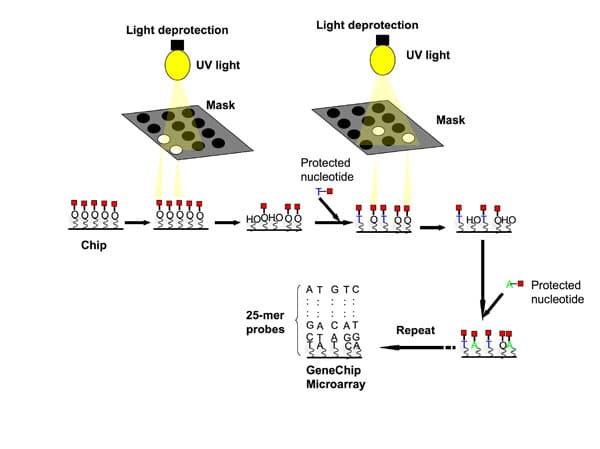
Previously, I introduced the DNA microarray technology and described the principle behind it: hybridization between the nucleic acid sequence from the biological samples being examined and a synthetic probe immobilized and spatially arrayed on a solid surface, the microarray. In this article, I will explain how these probes are designed and positioned on the array. I…
You’ve spent a few years optimising your experiments and gathering data, and with good planning, “The easier way to write a PhD thesis,” it’s all come together, and you’re ready to start writing it up. This is the last big challenge in getting your PhD finished, but it’s the part that can feel the most…

Do you want to immunoprecipitate (IP) a protein with a molecular weight that is anywhere near 55 kDa or 25 kDa? Then you have an irritating problem to deal with: antibody co-elution. But don’t panic, we have six strategies for dealing with your new problem. The Problem: Typically, the IP antibody is bound to Protein…
When it comes to writing up a research paper, there are many ways to go about it. If it’s just you doing most of the writing, with your supervisor, it is quite straightforward – you can just maintain a single copy of the document and exchange it by email. Software like Microsoft Word can track…

Working with RNA is definitely an acquired skill. It’s a lot more finicky than working with DNA, and requires careful attention to detail in order to avoid disastrous through RNase contamination. Here are a few common ways to lose your hard-earned RNA: 1. Don’t keep everything on ice Keeping the temperature of all of your reagents cool is…
Any research biologist spends a large amount of their working time at the computer, whether it’s writing articles, analysing data or just checking emails. In fact, any new research proposal will likely start by trawling Pubmed and online databases to get the latest information on a particular topic. But have you ever stopped to think…

Restriction enzymes are a basic tool in the molecular biologist’s arsenal. They’re super easy to use, and virtually essential for cloning and other applications. Restriction enzymes are also a great example of a perfect “tool” from nature that scientists have co-opted for their own use. Here are a few fun facts about restriction enzymes that…

Good organization is essential for keeping a lab in good running order. Databases of strains, plasmids, primers, and stocks are useful for keeping track of your materials, and allow your work to be continued easily after you’ve left the lab. In this article, I’ll talk about a few tools in Microsoft Excel that will make…
It’s time to start thinking about your next move. Maybe you’ve finished your undergrad/master’s degree and are considering doing a PhD. Or maybe you’re past all that and need to find a post-doc position. Amongst all of this, you might be considering the option of doing your PhD or post-doc in a foreign country. It’s…
I’m sure you’ve heard of Parkinson’s Law, or at least the modern-day generalisation of it. It states that “Work expands so as to fill the time available for its completion.” When I first heard this, back in the mists of time, I thought Mr Parkinson was damn right, had a chuckle at a very accurate…
I once knew a postdoc who was absurdly accurate at guessing the optical density of microbial cultures. I was jealous – imagine how much time I would save if I could spec my cultures just by looking at them! Since I lacked the innate optical talents required to compete with my friend, I developed a…

Transforming yeast with DNA is a very similar process to transforming E. coli, but with just enough differences to trip you up if you let your attention slip. Whether you’re doing a yeast two-hybrid screen, or using yeast as a model system, here are a some mistakes to to avoid… 1. Forgetting to add single…

One of Bitesize Bio’s regular readers asked me to interview people in jobs that don’t necessarily require a PhD. So, today I’m talking to Angela Briski who’s a research technician and currently working in stem cell research. Hope you enjoy the interview… You describe yourself as a Research Technician. And what exactly is it that…

Site-directed mutagenesis studies can be extremely useful for elucidating the function of a gene or protein, or for creating variants of an enzyme with new and improved functions. There are now many approaches available for generating site-directed mutants, whatever your purpose. In this post I’ll summarize three techniques that will enable you to produce a…

One of my colleagues, a very good molecular biologist, told me that the only time she uses chemistry is when she needs to calculate molarities. I, of course, scoffed at this statement, and tried to remind her of all the chemistry she uses daily. True, I may be a bit biased since I am a…
Thanks to the power of digital imaging software, faking data is a lot easier than doing real science. Clearly the honest majority of us would never deliberately distort the scientific record, but is it possible to stumble into trouble through sheer ignorance? Quite possibly. The line between innocent enhancement and deliberate fraud can be blurry…

This week our careers interview focuses on medical writing and what kind of opportunities are available for anyone looking to move into this field. Lauren Donaldson tells us how she got started out after her PhD and we’ll be comparing this with a freelance medical writer in the coming weeks so keep posted. You describe…
We scientists are all so focused on getting our work published that many of us seem to forget something very important; that publication is just the beginning. After publication is when our manuscripts really have to do their essential work of communicating our science to our peers. If no-one reads the manuscript, we might as…
Here’s an all-too-often repeated scene in the lab: First thing in the morning, you approach the 37°C incubator with trepidation, open it and through one half-open eye you take a look at the LB plate that you spread your ligation-reaction-transformed E.coli aliquot onto. Looks good – thousands of colonies. Emboldened, you take your “no ligation…

Learning how to speed read can save you a bunch of time; we’ve outlined some simple steps that will dramatically improve your reading speed.
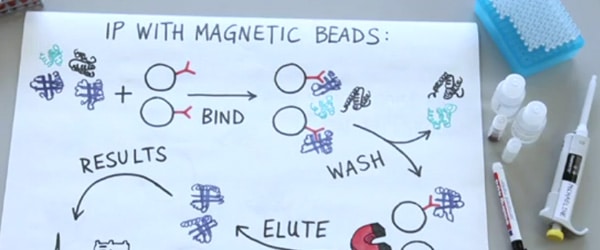
Sepharose beads are porous, which gives them a high surface area for interaction with proteins and allows them to hold a lot of liquid. This is perfect for the application that they were originally designed for: purifying milligrams of protein in columns. When immunoprecipitation (IP) – a small-scale technique for pulling specific proteins out of solution using…

This week we’re taking a look at the clinical research industry for some great advice if you’re thinking about moving into this field. Vicki Ronaldson, one of our staff writers, tells us all about her job and how she got there… You describe yourself as a clinical research scientist. And what exactly is it that you…
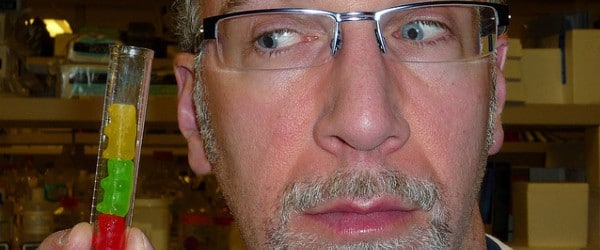
Virtually every research scientist has a use for sterile technique in the lab, whether you study infectious microorganisms, do tissue culture, or use E. coli for cloning. Good sterile technique is a basic lab skill required to avoid contamination of your materials and experiments; and fortunately, the principles are simple to learn and easy to…
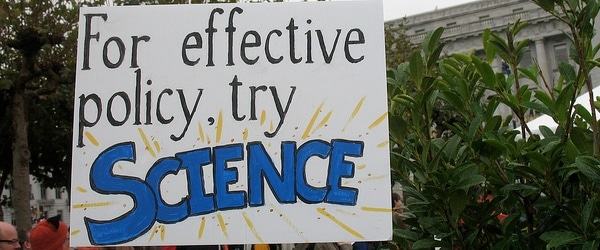
So you want to make a difference? Here’s a career move for you that I personally think is a terrific choice for a scientist. I’ve been speaking with Jennifer Pohlhaus, who works in science policy and here’s what she had to say about her job. Hi Jennifer, Your job as a Science Policy Project Manager…

At the end of my last article, I provided some practical tips and tricks for working with enzymes at the bench. Now, we’ll cover one of the cornerstone techniques of enzymology work: the enzyme assay. Starting with the simple assays and eventually working our way to the more complex, this article introduces the principles of…

So now you’ve had your job interview – how well do you think you did? Here are 5 tell-tale signs that should give you a clue. 1. The Interview Lasted Longer Than You Expected This isn’t 100% true in all cases, and I definitely know people who got jobs they didn’t expect due to the…

Looking for a new direction in your career? This is the latest in our new series of articles that focus on careers for scientists. When we started this series, we thought you’d be interested in finding out about who does what behind the scenes at Bitesize Bio, and how we got here. I interviewed our…
A partial digest – typically done when you only want to cut one of two or more restriction sites in a DNA – can be a frustrating procedure to execute. The best advice anybody can give about partial digests is to avoid having to do them. However, there are times when there just aren’t many…

Western blotting is a common lab technique used to detect and analyze proteins. It also happens to be a really long and complicated procedure, with many steps along the way that are easy to mess up. How do you make sure that your Western blot is successful? Avoid the following five ways to destroy your…

We’ve had some great feedback about this column lately. I hope you enjoy today’s interview as much as you seem to have liked the first couple we’ve covered. There’s more coming soon, looking at scientists who made the move into areas like Marketing, Regulatory Affairs, University Teaching and lots more in the pipeline. Today, we’ve…

Enhance accuracy, reproducibility, and insight in 2D cell culture research.

The eBook with top tips from our Researcher community.