
Immunohistochemistry: Getting The Stain You Want
Need a simple, error-proof protocol for using immunohistochemistry to stain your slides? Here’s a protocol to try – from dewaxing to mounting.
Join Us
Sign up for our feature-packed newsletter today to ensure you get the latest expert help and advice to level up your lab work.
Search below to delve into the Bitesize Bio archive. Here, you’ll find over two decades of the best articles, live events, podcasts, and resources, created by real experts and passionate mentors, to help you improve as a bioscientist. Whether you’re looking to learn something new or dig deep into a topic, you’ll find trustworthy, human-crafted content that’s ready to inspire and guide you.

Need a simple, error-proof protocol for using immunohistochemistry to stain your slides? Here’s a protocol to try – from dewaxing to mounting.

One of the many perks that we often experience as graduate students is the chance to work with a collaborating lab on a research project. A successful collaboration results in: I recently came back from a visit to one of my collaborator’s lab, and wanted to share the aspects that I felt were most important…

If you google “What’s hot in medicine,” you will see the word “gut microbiome” popping up in every corner of the webpage. Microbes keep your body functioning in balance – from digesting complex carbohydrates to fighting off foreign pathogens and educating your immune system. They have even been linked to maintaining brain function as well….

Flow cytometry remains unparalleled as a single-cell analysis technology. The ability to analyze 14 or more fluorescent parameters on a million cells or more allows for detailed understanding of complex biological processes. The Problem With Traditional Flow Cytometry One limitation of flow cytometry is the reliance on fluorescent tags. Even with careful panel design, loss…

How long has it been since you checked your lab freezer? Remember that plasmid you designed? How about that cell line you developed that now sits idly in the vapors of a liquid Nitrogen tank? And the novel peptide or enzyme from a few years ago that remains buried in permafrost? It’s time to revisit…

Mass Cytometry is a relatively new technology which has recently featured in many high-impact journals. You may have read about instruments including the CyTOF, CyTOF2, and more recently, the Helios. With these instruments becoming more widespread, you might find yourself asking, what is mass cytometry, and what can it do for you? The Basis: Conventional…

To isolate your protein, you are going to need to tag it with something that will allow you to fish it out of the bacterial protein soup. This is where transition metals can help you out!
Scientists today depend heavily on many molecular biology techniques to perform their research. For example, with the advent of next generation sequencing (NGS): scientists are able to look at very minute details, right down to individual genetic sequence variations. However, the increase in experimental complexity means that every extra step becomes more crucial than…

Nowadays, it is no longer absolutely true that applying for a PhD means that you are striving for an academic position in the future. Although a majority of graduate students are certainly still aiming for a career in academia, and will thus benefit from doing a postdoc or two, more and more graduates are pursuing…
Ion Torrent technology, when it was introduced in 2010, was one of several machines that promised to revolutionize genetics. These were benchtop machines that showed their prowess in quickly sequencing smaller exomes and other DNA samples (about 10-20 million bases per run, compared to Illumina HiSeq, which could read 250 billion bases in a run)….

Lab outreach programs are one of the ways that science reaches out to its future generations and entices them to join the ranks of those who have pledged allegiance to the pursuit of the unknown. Successfully running these programs for young adolescents depends on a certain number of factors, such as the ability to capture…
It’s happened to us all, you are ready to run your samples on the cytometer and you can’t see your cells on the screen. Here are a few tricks to troubleshooting this: Cytometer vs. computer connection The different types of cytometers will need different orders for switching on the cytometer and computer. Some are cytometer…
Phenol-chloroform extractions and ethanol precipitations can be a royal pain, but here are some tips to help you get tip-top results!

Do you work with plants? Are they genetically engineered? Do you know where and how? If not, you could experience problems. After all you do not want your transgenic gene cassette to disrupt genes that would affect your phenotype of interest. In this article I will tell you about Agrobacterium-mediated transformation – a widely used…

Basic Local Alignment Search Tool (BLAST) remains the cornerstone of biological sequence analysis. When users have one or few queries, the data are easy to interpret based on the graphical output that the search provides. However, when you have to analyze hundreds or a few thousand queries, running graphical outputs can be computationally intensive, difficult…
Wow, you’ve done it! Your experiment worked and your boss asked you to write it up for publication in your favorite journal. Where to start with presenting your flow data? Take a deep breath, help is in hand in the form of the MIFloCyt Guidelines. As with other scientific techniques, there are ‘Minimum Information about…

Digital PCR (dPCR) is a next generation qPCR that you might just need for quantitation and comparison of minute genetic copy differences.

Do you know about algae and their potential in today’s world? Do you know how to work with algae? Algae are becoming increasingly important in the research world.

Working in a lab can be stressful, there is so much to do, and so little time to do it that we often feel overwhelmed. Sometimes you come into the lab and there are 15 experiments that just need to be done, so you throw on some music and start doing a bunch of them…
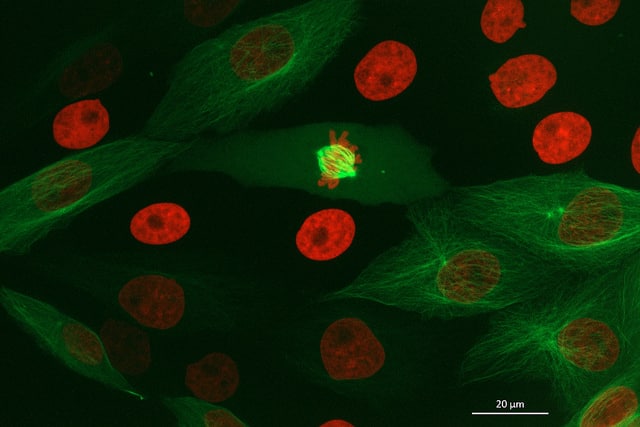
Even in the most basic applications, fluorescence microscopy can be a very powerful technique. Simply put, the ability to actually see the biology you are interested in cannot be matched in directness. Often, the aim of fluorescence microscopy is to observe the effect of an experimental manipulation. Ultimately, you would like to know that the…

Graduate students in the United States are privileged when it comes to picking their prospective labs: most programs have student rotate through several laboratories to help them choose their PhD lab. Here are some suggestions for questions to ask.
You might think Northern Blots are an old-fashioned technique. However, qRT-PCR is prone to false positives and negatives, and reviewers may require Northern Blot confirmation of your qRT-PCR results. So sometimes Northern Blots are a necessary evil.
One of the much sought after question asked by many researchers worldwide is – “What is the gene expression profile of a single cell within a heterogenous pool of cells?” While mass cytometry is the current ‘hot’ methodology for single cell analysis, the good old flow cytometry can help us perform rapid analysis of single…
You’ve had a rough day at the bench, putting in long, grueling hours with no pay-off. Your fantasy of running away to join the circus starts sounding rational. The last thing on your mind is to add to your already overloaded schedule. Yet as crazy as it sounds, participating in science outreach really improved my…

gif by Kronin Okay not talking about that kind of matrix. But the kind of matrix that is crucial for MALDI (Matrix-Assisted Laser Desorption Ionization). I talked briefly about MALDI in my last article, Imaging Mass Spectrometry: The New(ish) Kid on the Block. Now I want to tell you more about MALDI, specifically the matrix….
Selecting the right graduate school is not only one of the most important decisions an aspiring student has to make, but a really tough one as well. Keep reading for five practical things to consider when you are about to decide on which graduate school to join.
Pat yourself on the back, you saw a post with the word “coding” in the title and you didn’t freak out or glaze over. That’s the first step. Coding seems to have such a stigma attached to it; people tend to think that it’s incomprehensible nonsense that they could never learn, and that it has…

In the frenzy of today’s scientific publication landscape, it is essential to take a proactive stand at your online visibility and reputation. There are online tools that can help you make yourself spotted and translate your hard work and high-quality science into actual impact. So if you are interested in improving your chance of landing…

If you find it very difficult to call your boss by her first name, feel obligated to wear business casual clothes to the lab, or reckon that it’s slightly weird that your fellow PhD candidates are inviting you to a casual night out instead of to the library to study, then like me, you just…
We’re already gone through the basics of how gel electrophoresis work, compared common gel types like agarose and polyacrylamide and even explored some alternatives. Now let’s look at the native versus denaturing gels. You’ll be a speGEList in no time! Denaturing Gels We’ll start with this one, as it’s very self-explanatory. Denaturing gels are exactly…
In real life, cells are instructed to commit suicide for the greater good of the organism. The programmed cell death (apoptosis) is important during development of a multi-cellular organism. A good example you will appreciate is the dis-appreance of the tail from a tadpole as it turns into a frog. On the reverse, the lack…
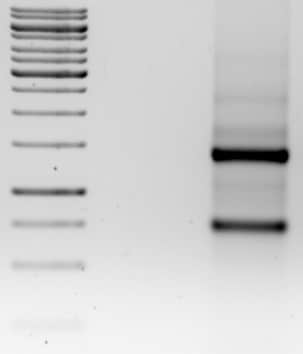
So, you’ve extracted your precious RNA and want to check its quality on a gel. Conventionally, you would run a formaldehyde gel, which is messy and requires a lot of prep. Plus, it is a huge undertaking in terms of time (and money) if all you want to do is just check the quality of…

Choosing a PhD topic can be very hard. There are a lot of things to consider from the subject to the supervisor. Here are some tips to help you choose. Find out what you really like This is the first topic because it is the most important. My first advice would be to get some…

Anyone working with laboratory animals has probably realized that simply putting two animals together does not always yield new offspring and reliable continuity of the animal line – unfortunately animal husbandry isn’t that simple! Of course, apart from making sure that the two animals put together are from different genders, there are a lot of…

We can, however, use special dyes or engineered proteins to bind to calcium, indicating where in the cell it is. The trick is determining which probe is most suitable to your cells and application.

Having just finished graduate school, I have been given the privilege of nearly unlimited time to reflect (Yay! Unpaid, Boo!). Graduate school was, for me, a juxtaposition of intellectual growth, real-world learning and great fun. An introduction to adulthood with training wheels—while simultaneously being a blur of anxiety, work, sleepless nights and existential crises. I…
Few things can dash your hopes quite like phages. They can annihilate whole bacteria cultures in the blink of an eye, and make your next cloning or expression project impossible. But you can harness these evil-do-ers for good. And use phages to screen massive libraries of peptides. Learn how below. The Typical “Evil” Phage Experience…
A busy research lab can be a challenging place to work for a variety of reasons. Science is a high pressure environment, often with looming grant or research paper deadlines, troublesome reagents, and experimental failure. Combined, these factors can cause many kinds of strife in the workplace, here are a few examples and some of my top tips for dealing with them!

Recently, I have witnessed the uprising of various next generation sequencing (NGS) platforms and it’s quite interesting because each platform uses a different method. Previously, I’ve written about the exciting possibility of nanopore sequencing—a new sequencing technology based on the “signature” electrical currents generated as a single strand of DNA passes through the nanopore. The…

Mammalian cell culture techniques are not simple, and culturing the cells requires a lot of maintenance as well as patience. In addition, doubling times compared to bacterial cells can take days instead of hours, which is most evident when contamination occurs. However, implementing small-scale hollow fiber bioreactors for culturing mammalian cells can save a lot…

The eBook with top tips from our Researcher community.