
Four Ways to Get CRISPR Reagents Into Your Cells
Read up on the various methods for delivering CRISPR reagents and how to choose between them.
Join Us
Sign up for our feature-packed newsletter today to ensure you get the latest expert help and advice to level up your lab work.
Search below to delve into the Bitesize Bio archive. Here, you’ll find over two decades of the best articles, live events, podcasts, and resources, created by real experts and passionate mentors, to help you improve as a bioscientist. Whether you’re looking to learn something new or dig deep into a topic, you’ll find trustworthy, human-crafted content that’s ready to inspire and guide you.

Read up on the various methods for delivering CRISPR reagents and how to choose between them.
Gene reporters enable valuable insight into gene expression. The GUS gene reporter system is one of the popular and common plant reporter systems. GUS, is short for glucuronidase, an enzyme in the bacterium E. coli. GUS is a good reporter for plants, as it does not occur naturally, and thus, has a low background. With…
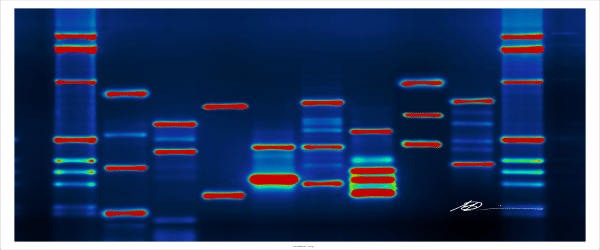
Sometimes you know a project is going to be a pain before you even start it. For me, that is whenever I need to clone large (> 3 kb) or complex (e.g., a sequence with repeats) DNA fragments. Long and complex DNA fragments are more likely to create challenges during cloning. Such projects require extra care in just about…

I know what you are thinking, everything is made of cells, so how different can DNA extractions be in plants? The answer is… sort-of different. The overall concept is the same. Cell membranes are lysed, DNA is separated from other cell materials, washed a few times, and then resuspended in water or Tris-EDTA buffer (aka…

Grab an overview of CRISPR technology from its roots as a bacterial defense system to how it can be utilized in health and research.

Viral vector production is a worthwhile skill that can be made even easier with a few tips and tricks. In general, transfection of multiple plasmids into a producer cell line results in infectious, non-replicative virus. However, it is important to ensure that your vector preparation is efficient, giving your experiments the best chance of success….

In Part I of AAV Production, I described how to produce crude (non-purified) AAV. In this article, I am going to tell you how to purify that crude prep. Virus purification is usually done by gradient ultracentrifugation. Two common methods involve gradients made from increasing concentrations of cesium chloride or iodixanol. A cesium chloride prep…

When you dephosphorylate a vector for cloning, you remove the 5′ phosphate groups required by DNA ligase to join the phosphodiester DNA backbone together. This prevents your vector from ligating back to itself during the ligation step and decreases your background. Various alkaline phosphatases exist, including calf intestinal phosphatase (CIP), Shrimp and Antarctic phosphatases. The…

In austerity times, nothing is in excess. Apart from saving reagents, which can be refilled with extra financial injections, there is a commodity that cannot be easily resupplied – tissue samples! If, like me, you have experienced the fear of not having enough sample for performing a qPCR, western blot, and conventional PCR from the…

Whatever molecular biology techniques you use, at some point you will have to clean up your DNA samples to remove things like buffers, contaminants and nucleotides from you precious sample, so that you have perfectly pure DNA for your downstream experiments. Magnetic beads are one DNA cleanup option. They are simple and effective—and their reassuringly…

You can create stably transformed plants expressing your gene of interest; be it for the subcellular localization of your protein or simply for the in planta protein expression and purification. Whatever it is, you can do wonders with plant transformation. Sound difficult? It isn’t. Just like there are millions of microbes that interact with us,…
At the heart of cloning are restriction enzymes. Restriction enzymes are a common tool in any molecular biology lab. Need to know how large your plasmid is? Cut it with a restriction enzyme. Need to chop your genomic DNA into smaller pieces for a southern hybridization or to prepare a library? Use a restriction enzyme….
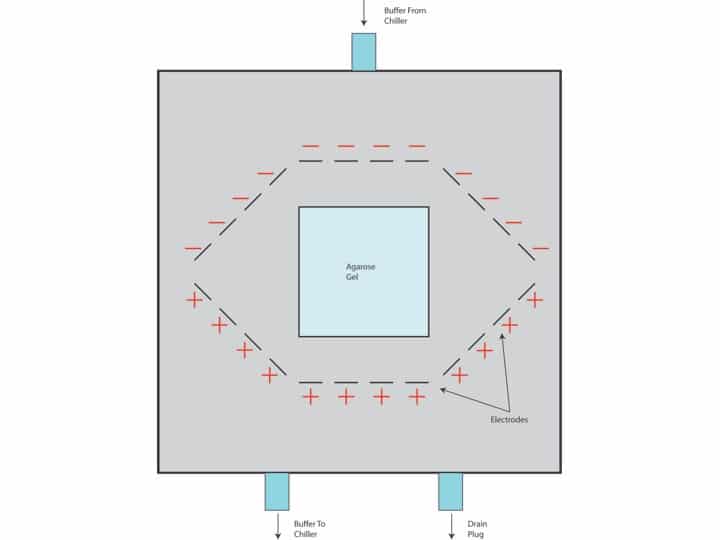
You have probably run a standard agarose gel hundreds of times. They are great for visualizing small DNA fragments up to 10 kb, but what if you want to examine really large pieces of DNA or even whole chromosomes? This is where pulsed-field gel electrophoresis (PFGE) comes in! While the equipment required to run PFGE…

Restriction cloning, at its core, is quite simple. You simply cut the target vector and insert with the same enzymes, clean digested vector and insert up, ligate the two together, transform the ligated vector and insert into bacteria, and then screen. While getting each of the steps correct can be a bit of a hassle,…

Cloning, purifying, and expressing modified genetic material is routinely done in microbes such as Escherichia coli (E.coli). Relatives of this molecular biology workhorse normally live in the intestinal track of humans. The particular E. coli strain (K-12) that scientists use all over the world was isolated from the feces of a diphtheria patient in 1922.1…

Serial Analysis of Gene Expression (SAGE) allows you to digitally analyze gene expression patterns. Not just of a few genes but for a cell’s complete gene expression profile. Before this technique, scientists were limited to studying a few gene’s expression at once by a technique called the expressed sequence tag approach. SAGE starts with mRNA…
Over the last few decades, PCR, next-generation sequencing, and microarray technologies have taken blood-based research to a new level. Modern blood-based applications range from DNA fingerprinting, whole genome sequencing, blood banking to liquid biopsy, and many more. Regardless of the application, pure, intact, double-stranded stranded, and highly concentrated DNA extraction from whole blood is an…

When you perform genomic DNA extraction from whole blood, low yield or low quality DNA can result in many issues. No matter your intended downstream application—qPCR, next generation sequencing, Sanger sequencing, and so on—you need high quality DNA. We’ve made this step-by-step guide to assist you in getting the highest possible DNA yield and quality, and…
Two years ago, all I knew was third BASE in my baseball field and the cutter ball from the pitcher. Now, I know a lot more about lab-based BASES and cutters: REBASE and NEBcutter. While they sound like baseball terms, REBASE and NEBcutter are tools for working with restriction enzymes. Read on to find out…

Has your supervisor asked you to do a polysome profile? Are you attempting them but running in to problems? This article will help explain what they are, the basics of the protocol and provide some helpful tips (including some things that I wish I had known when I first started out). Polysome Profiling: The Basics…

This is the first in a three-part series on the transformation of E.coli. By the end of this, you should be an expert on E.coli transformation and on which strains to choose for different applications. If you’re already an expert, I hope it’ll be an enjoyable refresher for you. Using Electricity for Transformation Foreign DNA…
Scientists today depend heavily on many molecular biology techniques to perform their research. For example, with the advent of next generation sequencing (NGS): scientists are able to look at very minute details, right down to individual genetic sequence variations. However, the increase in experimental complexity means that every extra step becomes more crucial than…
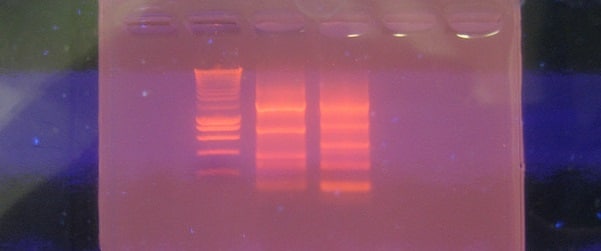
For several decades, Ethidium Bromide (EtBr) was the molecular biologist’s default dye for DNA staining. Now, EtBr is being consigned to the history books. It’s time to have a historical look at where it all started.
Ever wonder what those small colonies, like satellites, surrounding a larger E. coli colony on your LB with ampicillin plates were? Or why, when you picked that colony, it never had the plasmid you just transformed? Well, it’s because those satellite colonies are “protected” from the ampicillin by the big colony. Read on for more… Ampicillin…
The Boom method, or Boom nucleic acid extraction method, is a solid phase extraction technique for isolating nucleic acids from a solution of biological matter. This is just a fancy way of saying you use this technique to expose and remove the nucleic acids from a cell. First developed by William R. Boom, the Boom…

After you’ve generated your mutuations using CRISPR-Cas, the next step is to identify those cells that have been successfully edited. There are a few different ways to check for the mutations. I’m going to discuss some of the more popular ones.
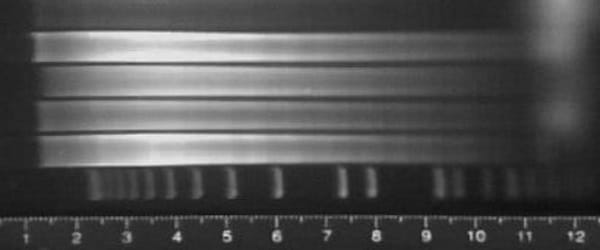
At a meeting recently, I asked two PhD molecular biologists about the last time they used a Southern blot. After nearly a minute of unrestrained laughter, they asked “Who on earth still does that?” “Maybe for a very, very specific use,” conjectured one of the scientists. When I asked the scientist who taught me the…

One of the most crucial steps in any cloning procedure is the preparation of the vector. Get it wrong and your chances of success will be drastically reduced. The overall aim for a good vector preparation is to obtain a fairly concentrated stock of undamaged, fully digested plasmid DNA that is free from contaminants. Missing…

Retroviral transduction is becoming a popular choice for gene delivery into mammalian cells and has multiple advantages over other techniques. If you decide to start work on this useful technique, here is how you can go about it. Step 0: Obtain permission First and foremost, do you have the permission, authorization, and training to work…

Having trouble with your cloning? It might be to do with the DNA gel extraction. Get our top 10 DNA gel extraction tips to help you out.

Generating a DNA vector library of single and/or compound mutants for a target protein can be a daunting task. If you’re lucky and work in a well-funded lab, you might outsource this process via gene synthesis. Most of us though, need to do it the old-fashioned way. Traditional QuikChange™ Traditionally, there are many steps you…

RNA purification may be a common procedure in molecular biology but it is by far the one that people fear most. Why? Dreaded RNase. It’s everywhere… all over your bench and pipettes, and floating in the air, waiting for the chance to creep into your prep, shred your RNA into nucleotides, and ruin a day’s…

The word ‘retrovirus’ evokes images of HIV, the AIDS pandemic and a desperate worldwide effort to defeat this mighty adversary. But on the flip side, scientific research has managed to tame the virus and use it as a tool for advancement. Retroviruses are commonly used to introduce genes into mammalian cells to express or knockdown…

Are you stuck in cloning hell?, Tired of doing ligations that don’t work? Want a faster, more efficient cloning procedure? You should try ligation-independent cloning. A growing number of researchers swear by ligation-independent cloning methods because they are simpler and more efficient than conventional cloning and as a recent convert to their ranks, I’d like…

Some tissues are tricky to work with. This truth was lost on me in the early years of grad school because I worked with liver samples. If you’re extracting RNA from liver samples, you’re likely not losing sleep over your massive RNA yields. But for the folks doing RNA extractions with less willing donors, such…

Get some ideas on what CRISPR can do for you and what using it involves.

When restrictions come in the form of paperwork and approvals, we detest them. Whereas, when the restrictions come in the form of enzymes, we love them, don’t we? Restriction enzymes play a key role in biotechnology research. Read ahead for six useful facts about restriction enzymes. 1. Restriction enzymes are helpful to bacteria Restriction enzymes…

You had been happily measuring your DNA samples with your NanoDrop for a while, until… you noticed that your results are not reproducible *gulp*.
Read on – here are 10 points that will help you troubleshoot the issue.

You have a new plasmid, now what do you do? You are excited to go further with your project. But before you can move on, you have to confirm the presence of your insert as well as the sequence and orientation of the insert. Is the insert the right size? Most people use restriction enzymes…

You open the incubator in the morning and to your dismay there are a hundred glorious colonies… on your vector-only control plate. While there are a number of potential causes, I’ll highlight a few of the more likely culprits and their solutions.

The eBook with top tips from our Researcher community.