
How to Get Started with Algae
Do you know about algae and their potential in today’s world? Do you know how to work with algae? Algae are becoming increasingly important in the research world.
Join Us
Sign up for our feature-packed newsletter today to ensure you get the latest expert help and advice to level up your lab work.
Search below to delve into the Bitesize Bio archive. Here, you’ll find over two decades of the best articles, live events, podcasts, and resources, created by real experts and passionate mentors, to help you improve as a bioscientist. Whether you’re looking to learn something new or dig deep into a topic, you’ll find trustworthy, human-crafted content that’s ready to inspire and guide you.

Do you know about algae and their potential in today’s world? Do you know how to work with algae? Algae are becoming increasingly important in the research world.

Mammalian cell culture techniques are not simple, and culturing the cells requires a lot of maintenance as well as patience. In addition, doubling times compared to bacterial cells can take days instead of hours, which is most evident when contamination occurs. However, implementing small-scale hollow fiber bioreactors for culturing mammalian cells can save a lot…
The MTS cell viability assay is one of the most important yet often daunting assays to perform for researchers in cancer biology, immunology, drug delivery pharmacy, etc. This chromogenic assay is extremely dependable for assessing the effects of a drug on different cell lines. However, it is only an easy assay to master if you…
The world as we know it couldn’t exist without microbes. It is estimated that there are tens of trillions of bacteria living just in and on humans. (Ewww?) One trillion has 12 zeros. To put that in perspective, the entire human population on earth is only 7.3 billion with a measly 9 zeros. With that many microbes…
The first thing you learn about culturing cells is proper aseptic technique and avoiding contamination. After that you’ll learn all the ins and outs of culturing your project’s specific cell line(s). What may not have been covered, is co-culturing, and I don’t just mean ethnic diversity in the lab! Co-culturing is the indirect or direct…
When choosing a model system for culturing tumor cells, we often think of the obvious tried and tested models. In vitro methods include cell lines that have been specifically selected to grow in culture flasks in incubators. While conveniently available, consistent and reproducible, cell lines are limited in that they may not represent the desired…
Normal cells are unable to replicate past several rounds of proliferation (termed the Hayflick limit) as with each round of proliferation the telomeres shorten. When the telomeres reach a critically reduced length, DNA damage is triggered leading to cellular senescence. Therefore, if you tried to culture a primary cell population it would eventually die unless…
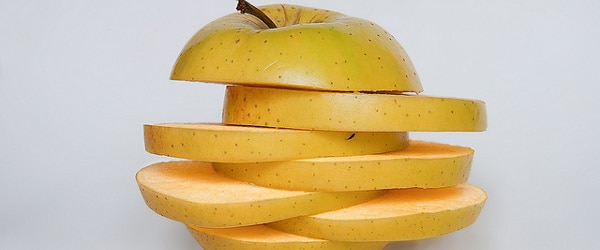
There is something undeniably special about embryonic stem cells (ESCs) and not just because they can produce every cell type in the adult body. In vivo, ESCs are a transitory state of early development, which has been captured indefinitely in vitro. Whether you are a hardened cell culture enthusiast or have just graduated from the…
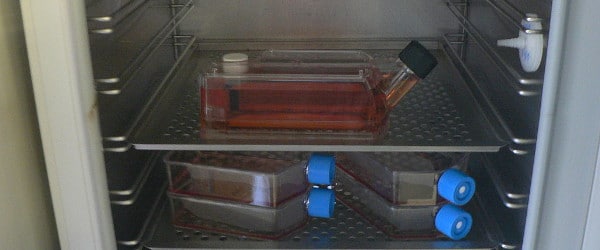
When you share an incubator with a number of people it can be very hard to keep a clean shop and months, or more, of work can be lost due to contamination. The two biggest sources of bugs in an incubator are: Both of these can be kept sterile using a few tips that we’re…

In the cell culture practice, heat inactivation of serum products has always been accepted and is one of the basic protocols passed on to new cell culturists. There is no strict standard protocol for heat inactivation, some say incubate at 56 °C for 30 minutes, while some say it can be efficiently performed using temperatures…

Mycoplasma is one of the biggest threats to cell culture. It’s quite easy to test cell cultures for the presence of mycoplasma using PCR, and we’ve got a simple protocol for routine testing.

Recently we wrote an article about widespread cell culture contamination and how to detect it. This follow-up article will provide practical tips on avoiding cross-contamination in the first place. Be Cautious While Working The first way of cross-contaminating cultures is by accidentally mixing two cultures together, which may lead to an unintended co-culture or the displacement…
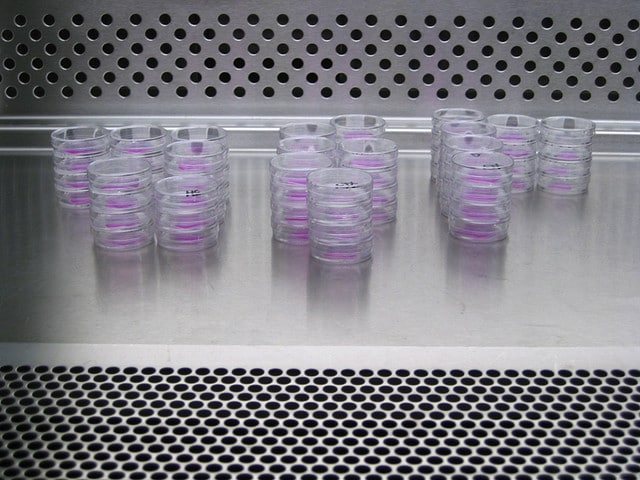
While working in a UK university, I met a researcher who loved Italy much more than the UK. I asked her why she had left her favourite country. She told me that before coming to the UK, she had a 2-year fellowship in Italy where she was getting some promising results and had the chance…

T cells can be problematic to characterise because they have a wide variety of subtypes and because of the technical difficulties of studying the membrane-bound T cell receptor, but there are situations where you want to be able to do this such as analysing the degree to which immunological memory has been induced to measuring…

You walk into your tissue culture room to find a window open, the incubator’s humidity tray empty and a pipette lying on its side in the hood on a used glove… After you have found and torn to shreds the person responsible for this monstrous act (!!), consider posting the below tips to help those…

We are pleased to announce that the famous maid of microbiology, dear old Aunt Yersinia, has agreed to start writing a microbiology and molecular biology advice column for Bitesize Bio. She will be free to answer your most pressing questions sent to: auntyersinia@bitesizebio.com By way of introduction, Aunt Yersinia is bestowing 8 spores of knowledge garnered…

One of the most exciting aspects of being a biologist is getting opportunities to examine how and why living organisms behave the way they do. We have technology that enables us to obtain images at sub-cellular levels, and the skills to work directly with the micro-environments essential for the progression of life. However, at the…
It is the black death of cell culture. Scientists don’t dare utter its name and many a graduate student has fallen victim to its indiscriminate menace. These stealthy anarchists infiltrate quietly but deliberately until their numbers swell and then they attack in strength, overwhelming their victims before they can put up a fight! What is…
You’ve been told that maintaining a sterile environment in a tissue culture hood is vital to preventing contamination of cell cultures. But what exactly is meant by sterile? The definition of sterile is ‘completely clean, sanitized, and free of all forms of life’. Obviously you still want your cells and/or any other organisms you are…

Apart from lung cells, surprisingly few cells are ever exposed to 20% oxygen, which is one of the reasons it’s hard to get in vitro cell cultures to behave. Read more about whether 20% oxygen is always the best level for cell culture and why it became the standard amount to use.
Anyone who has spent any amount of time in a cell or tissue culture lab will have experienced contamination at some point. You might not admit it, or want to admit it, but you know you have! I performed my graduate work in a basement university lab with an out-of-service emergency exit door in the…

Mammalian cell transfection is a technique commonly used to express exogenous DNA or RNA in a host cell line (for example, for generating RNAi probes). There are many different ways to transfect mammalian cells, depending on the cell line characteristics, desired effect, and downstream applications. In this article, I will review the different methods of…

Arguably, molecular biology is impossible without microbiology—even if you work exclusively with transgenic mice, you may one day need to amplify a vector in E. coli. And microbiology is definitely impossible without good aseptic technique. The main principle of good microbiological practice is a zero tolerance approach: it’s good to be a little paranoid about…

Mycoplasmas are the most difficult-to-detect organisms in your eukaryotic cell culture. And they can be the most dangerous; they can disrupt cell growth and differentiation and even apoptotic patterns without you even knowing what’s going on until it’s too late. Traditional cell culture methods can take up to a month to yield results, which means…

In a typical biology lab, you may encounter many types of biological materials, including cells, bodily fluids, purified DNA and RNA, enzymes, bacterial cultures, body parts, and whole animals. In order to perform experiments that yield quality results, samples need to be stored properly in order to preserve their activity or integrity. Beginning students and…

Summertime… The birds are singing, the trees are growing. Your tissue culture has sprouted yeast contamination, your yeast culture is happily growing bacteria. Your bacterial culture was growing calmly and predictably, dividing every twenty minutes, but suddenly its optical density has dropped, and it’s full of some sort of filaments and clumps. Or you did…
Before using any Biological Safety Cabinet (BSC) for the first time, have a person with working knowledge of the machine give you an overview of how to use the cabinet. Different labs have different protocols in regards to running the cabinet, disinfecting the cabinet, determining which pathogens that may be used in the cabinet and…

As we learned in my previous article, cell culture hoods have many names. As if that wasn’t enough, they are all-too-often misunderstood and mistreated, which can lead to dangerous situations harmful for both the worker and the general lab environment. Here are three common ways that workers abuse biological safety cabinets; make sure you don’t…

Biological safety cabinets, laminar flow hoods, clean hoods and culture hoods are all common names for those essential pieces of equipment that you use in cell culturing. The terms are used inter-changeably, but in fact there are lots of different types of culture hoods, each of which does a different job. Knowing which is which…
There are several yeast transformation protocols around, and most of them require a lot of steps: overnight starter culture, dilution and growth to logarithmic phase, several washes, and so on… These protocols work very well since they have been optimised for maximum transformation efficiency, which is needed for applications like library construction. But they are…

A young laboratory technician was puzzled by his plates when he pulled them out of the warm room. They never looked that cloudy and fuzzy before. He brought them to his lab director, who shook her head sadly; together, they threw the plates away. Does this story sound familiar? What probably happened was an all-too…
Mycoplasma infections are very, very bad news; these special prokaryotes can rapidly spread through your cell culture and inhibit cell proliferation, induce apoptosis, cytokines and radicals, and otherwise transform your cells. Worst of all, since contamination is not easy to spot, you may not realize your culture is contaminated until it’s too late. The 100…

While Luria-Bertani broth (LB) has long been the fuel that powered Molecular Biology and Biochemistry, there is an increasing movement towards more specialized and complex bacterial media formulations such as Terrific Broth (TB), Plasmid DNA Media (PDMR), and Autoinduction Media (ZYP-5052). These media formulations optimize E. coli cell growth and performance utilizing specialized carbon sources…

There’s more to mammalian cell culture than just making sure that your cells don’t die. It is a lot like taking care of children. You have to feed them, make sure that they’re growing well, and keep them under constant supervision. If the cells are put through extreme conditions (over-confluency, media-deprivation, inaccurate temps, etc.), their…

Do you use human cell lines in your research? Well, keep reading because this may be the most important article you will ever read in your research career. It is estimated that 18-36% of all actively growing cell line cultures are misidentified and/or cross-contaminated with another cell line (1). For researchers, this could mean that…

Back in August I shared my training regimen for guesstimating the OD600 readings of microbial cultures with superhuman accuracy. Although my method is effective, I will admit that it has two shortcomings: you need to make a separate standard curve for each container type, and guesstimation is not an officially sanctioned scientific method. But now,…
If you use a human cell line in your research, have you wondered where, or who, it came from? I never gave it much thought, until I read Rebecca Skloot’s book, The Immortal Life of Henrietta Lacks. In 1951, cervical tumour cells were taken from Henrietta Lacks and put into culture, to divide endlessly and…
I once knew a postdoc who was absurdly accurate at guessing the optical density of microbial cultures. I was jealous – imagine how much time I would save if I could spec my cultures just by looking at them! Since I lacked the innate optical talents required to compete with my friend, I developed a…

Transforming yeast with DNA is a very similar process to transforming E. coli, but with just enough differences to trip you up if you let your attention slip. Whether you’re doing a yeast two-hybrid screen, or using yeast as a model system, here are a some mistakes to to avoid… 1. Forgetting to add single…
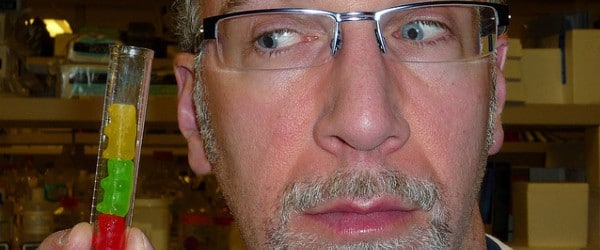
Virtually every research scientist has a use for sterile technique in the lab, whether you study infectious microorganisms, do tissue culture, or use E. coli for cloning. Good sterile technique is a basic lab skill required to avoid contamination of your materials and experiments; and fortunately, the principles are simple to learn and easy to…

The eBook with top tips from our Researcher community.