
How to Quantify Images in an Unbiased Way
Image analysis can be biased. Discover the three main steps to image quantification and learn how to quantify images in an unbiased way.
Join Us
Sign up for our feature-packed newsletter today to ensure you get the latest expert help and advice to level up your lab work.
Search below to delve into the Bitesize Bio archive. Here, you’ll find over two decades of the best articles, live events, podcasts, and resources, created by real experts and passionate mentors, to help you improve as a bioscientist. Whether you’re looking to learn something new or dig deep into a topic, you’ll find trustworthy, human-crafted content that’s ready to inspire and guide you.
Image analysis can be biased. Discover the three main steps to image quantification and learn how to quantify images in an unbiased way.
This article provides interesting insider PubMed tips, including how to use search filters and how to set up automatic search alerts.
The only constant with microscopy imaging is variability in both color and image quality. You only need to look at images in journal articles, posters, around your laboratory, or compare your images with a colleague’s—the evidence is staggering. Interestingly, variability doesn’t generally come from the digital camera, rather it comes from our use of imaging…
In the midst of all the cool new sequencing techniques and technologies out there today, you may have overlooked the tried and true method of Shotgun Sequencing. What is Shotgun Sequencing Anyway? Shotgun sequencing gets its name from the concept that a large sequence is essentially broken up in to many, many smaller pieces, similar…
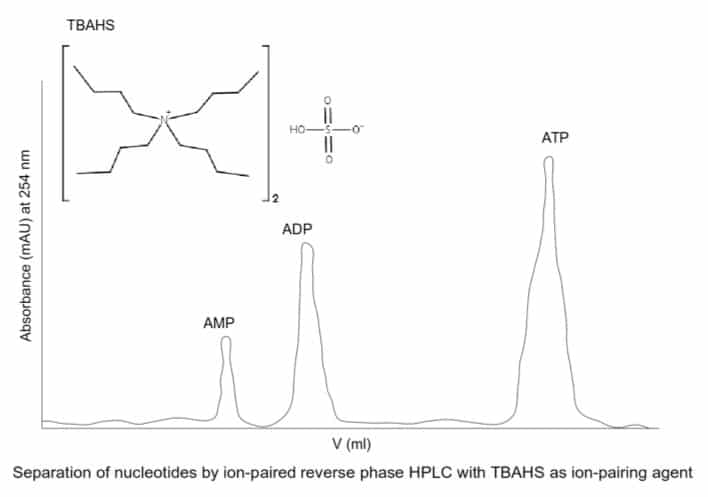
In my last article, I discussed how to best keep your lab’s HPLC running smoothly. However, even the best-maintained HPLCs and columns need periodic cleaning. Today, I’ll describe how to identify and troubleshoot a clogged HPLC column. Columns ARE Finite First of all, it’s important to realize that columns do have a finite lifetime. The…
Flow cytometry. Some people love it—most hate it—but all can agree that it is one of the most powerful analytical tools immunologists possess. Here’s a quick refresher: as the name suggests, flow cytometry measures the physical and chemical characteristics of cells. This is accomplished by fluorescently labeling cell surface markers/proteins using antibodies conjugated to fluorophores….
You can create stably transformed plants expressing your gene of interest; be it for the subcellular localization of your protein or simply for the in planta protein expression and purification. Whatever it is, you can do wonders with plant transformation. Sound difficult? It isn’t. Just like there are millions of microbes that interact with us,…
Communicating your science to a lay audience is different than giving a talk to other scientists. An urban legend says that when Michael Faraday verified the relationship between electricity and magnetism, he was asked to present his evidence to the prime minister of England. So, he had his coils arranged and he just moved a…
Like all technical fields, molecular biology contains a very robust “theoretical” realm and an equally robust “practical” realm. Unfortunately, these two existences don’t seem to overlap as often as we’d like. Consider, for example, a simple Western blot. While an antibody interacting with its target on a membrane seems pretty straightforward, there are numerous other…
If you work in the field of molecular biology, there is hardly a day that goes by that you don’t use nucleotides. But beyond the use of the four well-known deoxynucleotides in PCR, you can use nucleotides for several other applications. For example, kinases and phosphatases use nucleotides as substrates, and phosphotransferases transfer phosphate group…
At the heart of cloning are restriction enzymes. Restriction enzymes are a common tool in any molecular biology lab. Need to know how large your plasmid is? Cut it with a restriction enzyme. Need to chop your genomic DNA into smaller pieces for a southern hybridization or to prepare a library? Use a restriction enzyme….
Have you ever entertained the idea of learning to program? Have you tried but felt discouraged by the overwhelming amount of information out there? If you answered yes to both of those questions, I encourage you to try again with the following resources. Computer science is one of the best subjects to self learn. …
DNA shuffling uses PCR technology in a very creative way. It allows you modify your protein to make a new protein you want. You can evolve proteins in microcentrifuge tubes on your very own lab bench. Isn’t that fantastic? DNA shuffling is also a very powerful technique for directed molecular evolution. W. Stemmer first used…
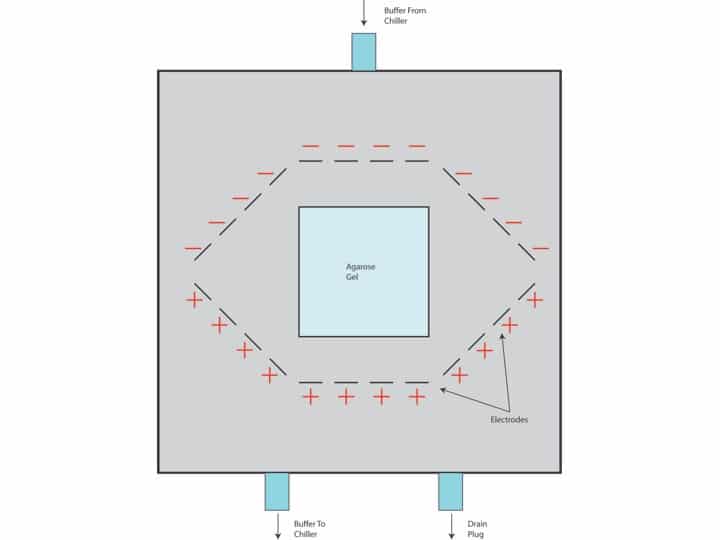
You have probably run a standard agarose gel hundreds of times. They are great for visualizing small DNA fragments up to 10 kb, but what if you want to examine really large pieces of DNA or even whole chromosomes? This is where pulsed field gel electrophoresis (PFGE) comes in! While the equipment required to run…
As science is becoming more interdisciplinary, the tools we use to answer questions are also crossing party lines. Case in point: flow cytometry. Once a tool only used by “real” immunologists, flow cytometry is fast becoming a method by which numerous questions can be answered, from the length of a cell’s telomeres, to the state…
If you’re anything like me, your biggest lab fear is working with expensive equipment prone to damage. HPLC is a wonderful tool, capable of separating, identifying, and quantifying a vast array of compounds, but it requires an attentive scientist to properly handle and maintain each component. In this article I’ll describe a few basic handling…
For many students, a PhD project is the first opportunity to really sink your teeth into your very own research project over a long period of time. This initial period is exciting but can also be a little daunting. Where do you begin? How do you actually design your first experiments? I mean, what are…
The enemy of my enemy is my friend –Ancient Sanskrit proverb Luna, 20 July 1969. Neil Armstrong set his foot in another world for the first and only time in human history. But this is not a story about space exploration; it is a story about the vehicle they used to do it—the Lunar Module…
A few years ago, when I was working for a biotechnology company, I got a special letter in the mail. The NIH asked me to be an ad-hoc grant reviewer for small business grants. Although I drew these lessons from the NIH grant review process, they can probably be applied to many granting agencies. If…
Speed up your SDS-PAGE with our time-saving tips and tricks!
Phosphorylation Equals Cell Signaling! How do cells communicate and respond to their environmental cues? This question has been on the hot list for scientists ever since the discovery of the cell. Cells use signaling cascades based on biochemical reactions to deliver or receive messages. How cool is that? The major secret of cell signaling was…
How do you pick which antibody you should use in your assay? If you’re starting a new assay and need an antibody for the job, then selecting a new antibody from the plethora available could be high up on your to-do list.
Restriction cloning, at its core, is quite simple. You simply cut the target vector and insert with the same enzymes, clean digested vector and insert up, ligate the two together, transform the ligated vector and insert into bacteria, and then screen. While getting each of the steps correct can be a bit of a hassle,…
Have you ever needed to work in a cold room for a long period of time? For example, if you need to dialyze or purify a protein of interest that is temperature sensitive, working in a 4°C cold room might be the only way to accomplish the work. Well, you are in luck. I dislike…
An essential step in mouse breeding is genotyping them to determine the genotype of every mouse in the litter. It is also useful to differentiate between various groups of experimental mice if any confusion arises. When genotyping, you will be hunting for the specific gene that you want your mice to have or a genetic…
The scientific method naturally includes the so-called “trial and error” approach. And you can think of your PhD experience in the same way. My PhD experience is a long story, and I’ve made a lot of mistakes. Therefore, I’ll share some of my trials and errors in earning a PhD to help you avoid the…
Scanning electron microscopy (SEM) is a powerful technique, traditionally used for imaging the surface of cells, tissues and whole multicellular organisms (see An Introduction to Electron Microscopy for Biologists)(Fig. 1). While the resultant images appear to be three dimensional (3D), they actually contain no depth information. However, there are several SEM techniques that can obtain…
Sometimes only a small subset of a cell population will show apoptotic features making flow cytometry an excellent way to identify and quantify them. A previous Bitesize Bio article showed how flow cytometry can detect apoptotic hallmarks. More than 30 different dyes can be used to detect apoptosis. It is also true to say that…
Writing manuscripts is an integral part of research. And being listed as an author on a published article is the most cherished dream of a research scholar/ graduate student. However, what about the corresponding author role? During your Ph.D tenure, you will be encouraged to compile your data and write manuscripts based on your results….
Cloning, purifying, and expressing modified genetic material is routinely done in microbes such as Escherichia coli (E.coli). Relatives of this molecular biology workhorse normally live in the intestinal track of humans. The particular E. coli strain (K-12) that scientists use all over the world was isolated from the feces of a diphtheria patient in 1922.1…
Every biochemist is familiar with proteases. More often than not, proteases cause a lot of anxiety. To this end, a lot of research has been done in developing techniques to prevent the activity of proteases. But some of these proteases can be the good guys too! For example, you can use them to separate your…
All scientists should be involved in some aspect of outreach. There. I said it. I know, I know. This goes completely against why most scientists pursued their careers in the first place: to dedicate their lives to discovery, and to do so alone. With minimal human interaction, especially with non-scientists. Why You Should Reach Out…
If you’ve ever had backache from sitting at the microscope or biosafety cabinet, these tips may be useful for you!
If you type on a keyboard, pipette, or do anything repetitive with your hands for a long time, chances are you’ve felt it: numbness in the base of the thumb, pain in the wrist, or a weak feeling in your hand. These sensations can come from a lot of things, but the symptoms add up…
Kary Mullis invented polymerase chain reaction (PCR) in 1985 creating a revolution in molecular biology techniques. But it hasn’t stopped there. PCR has greatly evolved over the years. Today, we stand at a point, where we can clone micro RNAs (miRNAs) in real time! Due to miRNA size (about 18-21 nucleotides long) and varied expression levels,…
The precision and accuracy of even the best calibrated pipette can be wiped out if you choose the wrong kind of tips. Depending on the experiment you are doing, the wrong kind of tips can also make your pipette a source of contamination, lead to waste of precious samples or reagents—or even cause you physical…
Fourier Transform Infrared spectroscopy (FTIR spectroscopy) is a useful and exquisitely sensitive technique used to identify and quantify unknown compounds, as well as study fine molecular details. However, to obtain a meaningful IR spectrum, it is not only important to prepare the sample correctly but also to learn how to clean the apparatus that houses…
Here’s a few things to take into consideration when starting up a new lab. Starting anything new is understandably overwhelming, but let’s break it down and go through the main points of designing your own laboratory. Purpose of Your New Lab The purpose and function of your proposed lab sets the course for the tasks…
SAGE, or serial analysis of gene expression, is a technique that enables you to digitally analyze the entire gene expression profile of a cell(s). Before this technique, scientists were limited to studying a few gene’s expression at once by a technique called the expressed sequence tag approach. The coolest part of SAGE is you don’t…
Sonication is mostly used during preparation of protein extracts to help break apart the cell. Although most lysis buffers have buckets of detergent that lyse cell membranes, sonication just gives an extra hand in breaking everything apart. Sonication also breaks up, or shears, DNA in a sample—preventing it from interfering with further sample preparation. Have…

The eBook with top tips from our Researcher community.