
A Crash Course in CRISPR-Cas9 Editing in Drosophila
Get tips and tricks for performing CRISPR-Cas9 editing in Drosophila.
Join Us
Sign up for our feature-packed newsletter today to ensure you get the latest expert help and advice to level up your lab work.
Search below to delve into the Bitesize Bio archive. Here, you’ll find over two decades of the best articles, live events, podcasts, and resources, created by real experts and passionate mentors, to help you improve as a bioscientist. Whether you’re looking to learn something new or dig deep into a topic, you’ll find trustworthy, human-crafted content that’s ready to inspire and guide you.

Get tips and tricks for performing CRISPR-Cas9 editing in Drosophila.

Designing a CRISPR experiment can be daunting. We’ve got tips and pointers to help you get off on the right foot.

Used for matching organ transplants to donors and other applications, human leukocyte antigen (HLA) typing is rapidly shifting from older methods to NGS technologies. This is a major step forward, as more complete views of the highly polymorphic HLA genes provide a deeper understanding of how a person’s natural genetic variation might affect transplant matches…

PCR was actually one of the first lab techniques I learned as an undergrad. Despite being sometimes labeled as a pretty basic lab skill, PCR doesn’t always work as expected. This “fickle” success is due to small details or hidden hazards within the PCR workflow that can cause your seemingly uncomplicated experiment to fail. This…
Scientific meetings provide an opportunity to learn, network, and explore new ideas. They are also an exciting break from the usual lab routine. Although organizing a Departmental or Institutional academic event takes up your research time, the experience helps develop leadership, project and budget management, and problem solving skills that will make your CV shine….

Hello again, fellow Flow Cytometry Fan! It looks like you have your experiment all planned out, including staining protocols and gating schemes, and are ready to get some paradigm-shifting data. But before we start “plugging-and-chugging” samples through your cytometer of choice, we need to make sure that the nozzle size and sheath pressure are set…
Phage display – the process of genetically fusing antibody fragments with phage to identify binding partners to your protein of interest – was covered pretty thoroughly here over the past few months. The success of this assay predicates on creating a diverse library of up to 1012 genes coding for these antibody fragments. Despite being…
Your grad school acceptance letter finally came in the mail. Congrats, that’s no small thing to accomplish! You did your happy dance, but then it hit you: Grad school in the fall is a reality and things in your life are going to change. So now you’re wondering how to fill those awkward months between…

If you want the kind of fluorescent IHC images worth those extra color publication charges, you’ve come to the right place. Read on for tips and tricks to getting stellar IHC staining.

Working with anaerobic chambers is a unique skill set to have. It is only necessary if you are working with oxygen sensitive compounds. For example, some metallo-proteins require an oxygen free environment to stay in a reduced state, while others are sensitive and even reactive to oxygen. Sometimes working in anaerobic chambers requires a long…
Unpacking the Daunting Task of Stereology for Electron Microscopy Electron microscopy provides fantastic detail and resolution, with brain electron microscopy allowing visualisation of neurons and their individual synaptic connections. You may find yourself needing to count these neurons or connections, which can easily go into the billions. But counting these one-by-one isn’t really feasible. This…
To successfully edit your genome of interest, one critical step is to test the sgRNA you have designed. Fortunately there are programs that have been developed such as CRISPRscan for zebrafish, SSC, Sequence Scan for CRISPR, or WU-CRISPR that you can use to predict the efficiency and the suitability of the sgRNA. However, the prediction…

Are you finishing up your PhD and starting to think about the next step? It can be overwhelming to consider all of the personal and professional aspects involved in deciding and beginning this next stage of your career journey. With personal perspective from someone who has been there, here are some tips on how you…
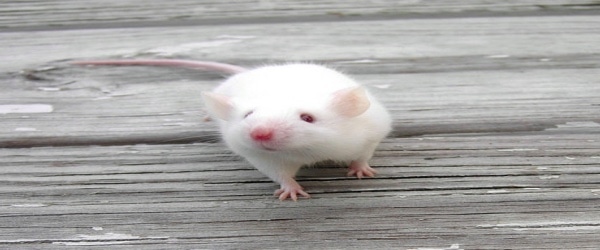
You might have heard of the Cre-loxP system even if you are not directly working with genetic manipulation. The Cre-loxP system is an ubiquitous technology for genetic manipulation and a mainstay in mouse research labs. With this system you can delete genes in cells, specific tissues and even whole organisms! You can start to master this system by…
My phone’s email notification went off, and I rolled over in bed to look at the clock. Saturday, 5 am. Wonderful. Who would email me at that hour? It had to be my undergraduate research PI. I unlocked my phone. Yep. Doesn’t he ever sleep? Dear Casey: We are launching a new collaborative project in…
The Biopython Project is an amazing initiative that helps scientists use Python for bioinformatics – and it’s exceptionally easy to learn! You can access online services, parse (read) different file types, analyze, and do a bunch of fun stuff with your data with Biopython. The people behind the project have put in a lot of…
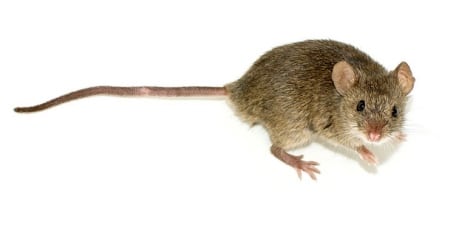
One of the major roadblocks to the development of novel therapies is the lack of robust and reliable animal models. Selecting and validating animal models that mimic human conditions is challenging, especially when faced with chronic multi-factorial diseases such as diabetes and obesity. Acknowledging this problem, the National Institutes of Health initiated the Animal Models…

Engineering a mutation or overexpressing a recombinant protein to study and characterize its function in mammalian cells is no easy task. Luckily, Chinese hamster ovary (CHO) cells, which have been a mainstay in the lab since the 1950s, represent a relatively easy mammalian model system to engineer. There are several methods to choose choose from…

Flow cytometry is fast evolving from a method only revered by immunologists, to one used by nearly every biological specialty. It’s pretty much my favorite tool. Unfortunately, as with most lab techniques, much of flow cytometry is taught on the job without a lot of standards. And too often bad habits are passed along like…

Bubbles isn’t just the name of my favorite cartoon character from Power Puff girls, or just the best activity for a kid to play with, in general. In my adult world, they stand for a whole lot more, but can still cause extreme emotions. At the lab bench, seeing bubbles brings happiness or sadness depending…
Biosensor chip selection is a critical step in planning and running a surface plasmon resonance (SPR) experiment. Chip selection depends on the ligand or target that needs to be immobilized on the sensor chip, the analyte that is flowed over the target to study the binding, and the purpose of the biosensor assay (i.e., determination…
The polymerase chain reaction (PCR) is the backbone of many lab techniques. In short, it allows for the exponential amplification of a specific segment of DNA. Through the use of primers encoding restriction enzyme sites, these amplified fragments are used in downstream cloning procedures, usually leading to the insertion of one, maybe two, PCR fragments…
Simple Tips for Model Organism-Based Work The mouse is the favored model organism for life science researchers so much so that mice account for about 95% of all lab animals used in research. The striking similarities between the human and mouse genomes, ease of genetic manipulation and the uniformity achieved through inbred mating makes them…

Apoptosis, or programmed cell death, can be detected on tissue slides using stains in conjunction with immunohistochemistry and/or reporter assays.
In biology, a molecular barcode is a characteristic DNA sequence used to distinguish and gather together similar items. Such a simple but powerful concept is useful in various applications. As an example, the Barcoding of Life project aims to identify specimens through the sequencing of standard gene regions, and use these as barcodes. On the other…
Every bio- scientist who wants to analyze DNA knows that the process begins with the extraction of DNA from cells of interest. These cells could be RBCs, parasites, or bacteria to name a few. Furthermore, there are various DNA extraction methods1 to choose from depending on sample type, downstream analysis, and so forth. Many scientists…

It’s your first conference talk, and you’re as ready as ready gets. Your outfit is on point, you’ve practiced your talk to perfection, you’ve backed up your slides on two flash drives plus your laptop (just in case), and everything is under control. Well, except for one thing: the dreaded Q&A session. There’s no telling…
DNA Purification We all use our favorite techniques for DNA cloning, such as Gibson assembly, TOPO cloning, ligation independent cloning (LIC), and TA cloning. However, DNA purification methods themselves, haven’t changed all that much since the 90’s. Historically, the introduction of phenol extraction in 1956, to purify nucleic acids from rat liver, rapidly replaced previous…

In most people’s minds a flow cytometer can sort, view and count cells e.g. lymphocytes, thymocytes, cultured cells and even non-mammalian cells such as yeast or bacteria. However, in reality, a flow cytometer is capable of providing information about any particle as long as it has detectable fluorescence. This fluorescence may occur either inherently or…

A while back, one of our readers asked for a quick and easy and quick way to extract plasmids from transformed Agrobacterium tumefaciens cells. They pointed out that plasmid copy number is often low in Agrobacterium and that yield can be poor in alkaline base miniprep protocols. The short answer is that there is no…

When you think about having a baby, you picture all kinds of things. The good: cute baby clothes, new baby smell, unlimited cuddles. The bad: sleepless nights, bodily fluids, being on-call 24-7. You probably also give some thought to coming back to work. You planned out your maternity leave, paid or not, and figured out…
The traditional microscope that you know and love is operated manually. Picture the scene: the microscopist chooses the light source, gently places the sample the moveable stage, selects the objective lens, and scans to select the field of view. This process is perfect for processing and analyzing a small number of samples per day.But nowadays,…
Like graduate students, proteins are sensitive to rough handling. This is particularly true when they (the proteins, not the students!) are being concentrated, purified, and stored. We’ve covered the many options out there for concentrating your proteins, along with how to handle protein extracts to keep your proteins safe from degradation. But proteins can degrade…
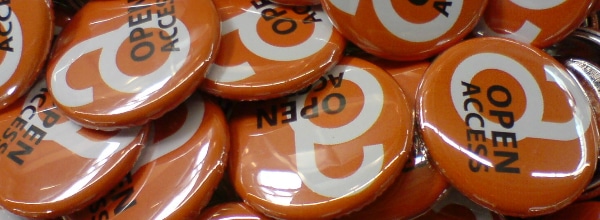
We review Open Access publishing models so you can make an informed decision about what is best for you and your research.

NGS is not a three-headed monster. However, it can be a difficult concept to grasp—especially when you are getting started. There is a lot of new terminology, and a whole new world to discover: both in the lab bench and in interpreting your results. It helps to start somewhere. So, let’s start! Depth of Coverage…
So, you’ve slaved away in the lab for months and now you’re ready to create your first figure –whether it’s for a thesis or a journal – way to go you! Now you could always use Word or PowerPoint to compile your first image, but don’t – ever do that! (And if you plan to…
Successful western blotting means achieving unambiguous results, and this requires a sensitive and specific antibody-antigen interaction. Consequently, high quality antibodies are critical for reliable and consistent western blotting. Western Blotting Process In the basic western blotting process, polyacrylamide gel electrophoresis (PAGE) separates a mix of proteins according to their molecular weights (denaturing gels) or their…

Your reagents should do ‘Exactly what they say on the tin.’ This only happens though if you look after them in the way the manufacturer states on their data sheets. We have all been guilty of using reagents past their expiration date. Usually we can get away with it, but there are a few things…
In this article, you will be introduced to the world of fluorescent western blotting. Firstly, we will compare fluorescent and chemiluminescent western blotting. Then, we will learn how infrared fluorescent western blotting can give you truly quantitative and reproducible results. Lastly, we’ll look at the many advantages of fluorescent western blotting, including the possibility to multiplex. Importantly,…
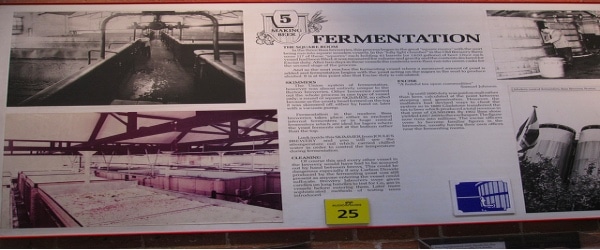
Some names are confusing. For example, ant-lion is not an ant – or a lion. Likewise, fermentation in the scientific sense does not involve using a ferment or brewing beer. In science, fermentation is the setting up of a long-term culture of eukaryotic or prokaryotic cells. Fermentation is invaluable in providing a steady flow of…

Enhance accuracy, reproducibility, and insight in 2D cell culture research.

The eBook with top tips from our Researcher community.