
The Wet-chamber Method: How to use Less Antibody and Save Money
Want to save money on one of the most expensive steps of your Western blots? Then, use less antibody for significant cost savings!
Join Us
Sign up for our feature-packed newsletter today to ensure you get the latest expert help and advice to level up your lab work.
Search below to delve into the Bitesize Bio archive. Here, you’ll find over two decades of the best articles, live events, podcasts, and resources, created by real experts and passionate mentors, to help you improve as a bioscientist. Whether you’re looking to learn something new or dig deep into a topic, you’ll find trustworthy, human-crafted content that’s ready to inspire and guide you.

Want to save money on one of the most expensive steps of your Western blots? Then, use less antibody for significant cost savings!
There are many kinds of supervisors out there, ranging from the amazingly laid back to the crazy micromanagers. There are various strategies for dealing with all of them, but what do you do when your boss is a bully?
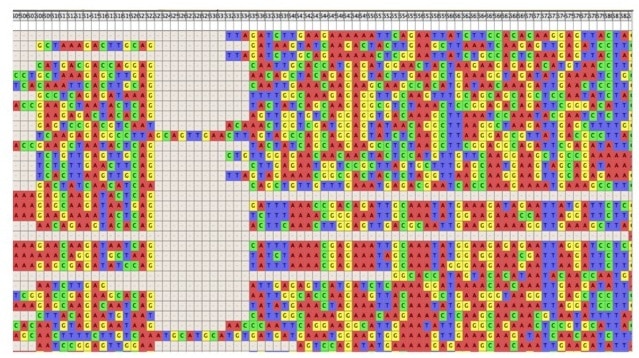
Welcome to the magical world of systematics! Looking for a way to produce a phylogenetic tree that’s a step above the default options, time efficient, not too program heavy and avoids using command line programs? Although there are more rigorous analyses that strict systematists perform, for your purposes, the following should suffice. 1. Data selection…
Size selection is a critical step in NGS pipelines, but may be most challenging for studies of small RNAs. The concept behind size selection is simple: separate a sheared DNA or cDNA sample by fragment size, and then use the resulting sizes to remove unwanted fragments. This is a tried-and-true way to get rid of…

In the previous installment of this series on western blotting, we addressed potential sources of error when your final product is completely bare. But alternatively, what do you do when too much background is the problem? You may have beautiful bands of interest—but if there is a bunch of non-specific binding, your quantification and data…
In Part 1 of these articles, you’ll have learnt about common microscope light sources and how to replace and align these correctly. In this article, we will discuss the importance of Köhler illumination and how to set up the microscope to achieve optimal imaging results. What is Köhler illumination? Before discussing this technique, let us…
Do you want the best imaging experience each time you use a microscope? Well, this is a rhetorical question, as we all desire that these delicate optical instruments are clean, free from immersion oil and correctly aligned. From the routine checking of slides, capturing images for presentations and publications, to diagnosing diseases using point-of-care microscopes,…
It took scientists a little while to warm up to long-read sequencing, but now you couldn’t pry most of them away from their sequencers with a crowbar. Long reads — we’re talking 10,000 bases and more — provide a level of contiguity and completeness in genome assemblies that simply isn’t possible with short-read sequencers. They…
The age of sequencing is undoubtedly upon us. From improving cancer diagnostics to pinning down elephant poaching hotspots, DNA sequencing is revolutionizing the world around us from the ground up. The latest video from Thermo Fisher Scientific’s “Behind the Bench” blog, 10 moments in DNA sequencing gives fascinating insights into the amazing advances being made…
Of all the sample prep steps necessary for next generation sequencing, DNA size selection may have the greatest impact on quality of results. After all, ineffective sizing can waste sequencing capacity on low molecular weight material such as adapter-dimers or primer-dimers, while imprecise sizing can prevent bioinformaticians from producing accurate assemblies. High-quality size selection can…
Given enough time, even the worst rookie research disasters seem amusing. It’s a comedy of errors that test our wit and our patience, but ultimately leave a lifelong impression on how to try experimentation a little bit differently the second time around. With that said, here are 5 brief stories of amusing things I’ve witnessed…

Do you want to know more about the story behind some of today’s big developments in sequencing technology? Illumina recently started a video series called “Adventures in Genomics” that introduces the people working on methods and applications, making big waves in our understanding of science, biology, and medicine. The company’s most recent video covers single-cell…

Western Blotting is a long established method for which the protocol varies little from lab to lab. However, there are kits available and some tweaks that can be made to the protocols that may improve your results and reduce the time it takes you to execute this popular technique. Save Time by Co-Incubating the Primary…
Whether as a summer intern, exchange student, MSc, PhD or post-doctoral student, working abroad can be one of the many perks of working within the sciences. Although these experiences will often require substantial planning in advance, there are funding opportunities and many receptive destinations around the globe. During my undergraduate degree, graduate studies hadn’t been…

Although bench work is an integral part of becoming a successful scientist, it is by no means the only part of it. It is often the uncredited skill set possessed by many seasoned scientists that make them so valuable to employers and to further research. In this article I will highlight the less obvious skills…
As a graduate student or PhD scientist you are likely to be surrounded by plenty of career advice and options – that is, if you’re interested in a career in academic research or the biotechnology and pharmaceutical industries. Those of us who aren’t sold on either of those fields are left wondering what other career…
The flow cytometer that we have all grown to know and love may have only come into its own in the 1990’s, but who would have known that the first cell sorter was invented as early as the 1950’s? With the recent death of one of the key developers of fluorescence activated cell sorting (FACS),…
As a protein biochemist and a Ph.D. student, I was given the task to express a eukaryotic protein in a bacterial system. And to say that I was having a hard time would be an understatement. It took me many PCRs, cloning and transformations to get to the right construct that would eventually express the desired…

The prospect of walking into the lab for the first time to do some ‘real’ research is hugely exciting. Ambitious thoughts fill your mind about what a brilliant research scientist you are about to become, making that all-important difference and saving the world. That is, until you step over the threshold and The Fear overcomes…

Sometimes the biggest hurdle to mastering a new topic is mastering the vocabulary. To help you master optical fibers I put together this illustrated glossary of Optical Fiber Vocabulary. Read this along with my first article “Introduction to Optical Fibers” and you will be well on your way to mastering optical fibers. Acceptance Angle The…
Normal cells are unable to replicate past several rounds of proliferation (termed the Hayflick limit) as with each round of proliferation the telomeres shorten. When the telomeres reach a critically reduced length, DNA damage is triggered leading to cellular senescence. Therefore, if you tried to culture a primary cell population it would eventually die unless…

While they may not be as in demand as when they were the basis of sequencing projects, bacterial artificial chromosomes (BACs) are still used for a wide variety of projects. Based off of the F origin of replication, BAC vectors can stably maintain up to 300 kb of sequence in a single plasmid, lending themselves…

If you look closely, there’s a scenario that plays out frequently in labs across the world: A scientist sits hunched over dry ice searching exhaustedly through frozen boxes for one sample that has disappeared into the abyss. The tube or specimen in question was likely catalogued at some point in time. But, between then and…
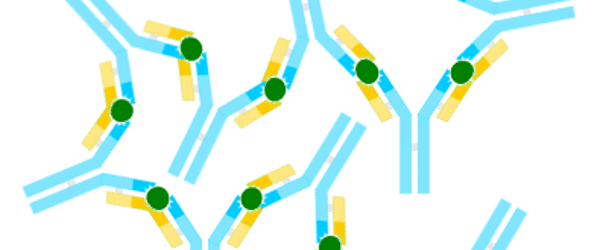
Monoclonal antibodies: You’ve probably heard a lot about them. Unsurprisingly, you may have also used them in your research. These antibodies (mAbs) are classically produced by the hybridoma technology pioneered by Köhler and Milstein in 19751: A mouse is immunized with the substance against which you need to produce an antibody. The mouse spleen cells (consisting…
A new lab toy to make it big in the last 5–10 years is the Accuri C6 cytometer (now under the BD umbrella), a low-cost instrument in comparison to the big boys. Lightweight, with a small footprint and straightforward maintenance, it’s often the cytometer of choice. It may be suitable for those labs that require…
There is something undeniably special about embryonic stem cells (ESCs) and not just because they can produce every cell type in the adult body. In vivo, ESCs are a transitory state of early development, which has been captured indefinitely in vitro. Whether you are a hardened cell culture enthusiast or have just graduated from the…
If you’re new to next gen sequencing, figuring out what to do with your results can be a daunting process. Luckily, you’re not alone—plenty of people have been in your shoes, and there is tons of information about data analysis out there. Here are some free resources you can use to get up to speed…

I think we all have been through those my-PCR-product-didn’t-get-amplified days. Sometimes, playing around a bit more with the PCR conditions brings luck, or sometimes it doesn’t work at all. These days we have access to many different types of DNA polymerases, ultrapure and buffered nucleoside triphosphates, and other necessary starting materials in convenient concentrations; but…
I still remember the first time I stood in front of a crowd of about 35 people, including my brand new lab mates and professors, in my first ever lab meeting. My feet were as wobbly as ever, and all I wanted was a big boulder to hide behind, so my crazy, shaky legs would…

So far in this series I have given you an overview of how STED works and how to design your STED experiments. In this final article, I will tell you how to do two color STED and go over some tips and tricks to acquire the best images from your sample. Dual Color STED Fluorophore…

During my second year in graduate school, I (silently) started freaking about life post-PhD. I read voraciously about science writing, scientific editing and business consulting positions. I went to seminars offered by the career center at my school. But, I was still lost. Between all the pipetting and PCRs, I could not figure out what…

While most may think standard Taq is the backbone of PCR, many other DNA polymerase options exist. The polymerase you use significantly impacts the efficacy of your PCR, specifically on the product yield, the purity of the product, and the faithfulness with which the starting product is transcribed. Sometimes, these matter less, and quick and…
Through our eyes, seeing is not always believing. Under different lighting conditions, we tend to see the same objects as having the same color. For example, an apple will appear red whether it is lit by daylight or candlelight and a white sheet of paper will be perceived as being white regardless of the light…
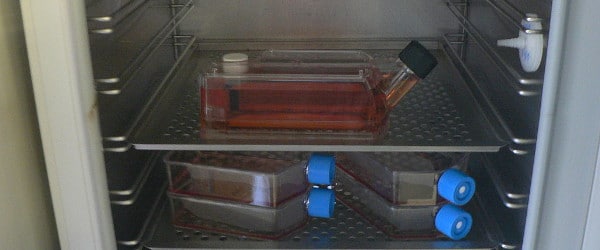
When you share an incubator with a number of people it can be very hard to keep a clean shop and months, or more, of work can be lost due to contamination. The two biggest sources of bugs in an incubator are: Both of these can be kept sterile using a few tips that we’re…
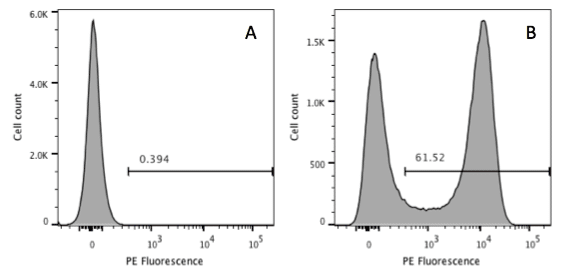
In many biological experiments the question that a researcher wants to ask is – ‘do some or all of my cells express a particular protein?’ There are many ways of doing this, which you will be familiar with e.g. Western blotting, immunoprecipitation, microscopic examination of stained cells and even mass spectrometry. Using Flow Cytometry to…

Think of the very first time you looked at cells under a table-top microscope. Here’s what you would have done in that experiment: Step 1: Grow cells. Step 2: Plate cells on to a glass/quartz slide. Step 3: Insert the slide under a microscope and look. The protocol for performing single-cell microscopy has a similar…

The ELISA (enzyme-linked immunosorbent assay) is arguably one of the most important and versatile tools in the toolbox of molecular biologists, biochemists and diagnosticians across the world. Defined by its simplicity and speed, the assay is easy to learn and perform in as few as five steps. But with so few variables to manipulate, an…

Let’s say you work with a gene, and it has wonderful potential. Excitedly, you throw your gene into the cells and voila! It’s there. Great. Now what? Genes are powerful tools for directing cell activity, but thanks to that curiosity characteristic of scientists, we want to know more: So what do you do? You had…
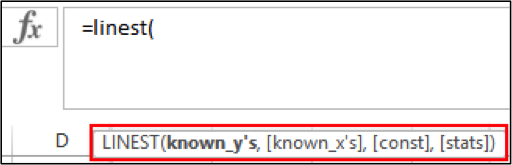
Last time we brushed up on cell referencing and constructing formulae to use Excel for some basic and some slightly more advanced calculations. This time we’re going to move on to using some built-in Excel functions and go through how to apply all that we’ve done so far to a worked example that is relevant…

Protein expression is an art. There are many routes to optimize a protein expression protocol, such as using different expression systems (e.g. E. coli, yeast cells, insect cells) or changing the expression vector or culture media for the expression host. Fortunately, optimizing the parameters mentioned above often leads to improvements in your protein expression results. However, there is one other…

Enhance accuracy, reproducibility, and insight in 2D cell culture research.

The eBook with top tips from our Researcher community.