
10 Tips for Better DNA Gel Extraction Results
Having trouble with your cloning? It might be to do with the DNA gel extraction. Get our top 10 DNA gel extraction tips to help you out.
Join Us
Sign up for our feature-packed newsletter today to ensure you get the latest expert help and advice to level up your lab work.
Search below to delve into the Bitesize Bio archive. Here, you’ll find over two decades of the best articles, live events, podcasts, and resources, created by real experts and passionate mentors, to help you improve as a bioscientist. Whether you’re looking to learn something new or dig deep into a topic, you’ll find trustworthy, human-crafted content that’s ready to inspire and guide you.

Having trouble with your cloning? It might be to do with the DNA gel extraction. Get our top 10 DNA gel extraction tips to help you out.

If you find it very difficult to call your boss by her first name, feel obligated to wear business casual clothes to the lab, or reckon that it’s slightly weird that your fellow PhD candidates are inviting you to a casual night out instead of to the library to study, then like me, you just…
Have you read an article How To Start Your PhD The Right Way? If you have, then you may have already decided that you are going to do a PhD. The next step is to choose your supervisor – this is a very important decision to make. When I chose my supervisor, I had only…
ECL can be an expensive reagent in a lab. Why not make your own? Hopefully, this quick, simple and cheap solution will be of help to you!

Some tissues are tricky to work with. This truth was lost on me in the early years of grad school because I worked with liver samples. If you’re extracting RNA from liver samples, you’re likely not losing sleep over your massive RNA yields. But for the folks doing RNA extractions with less willing donors, such…
We’re already gone through the basics of how gel electrophoresis work, compared common gel types like agarose and polyacrylamide and even explored some alternatives. Now let’s look at the native versus denaturing gels. You’ll be a speGEList in no time! Denaturing Gels We’ll start with this one, as it’s very self-explanatory. Denaturing gels are exactly…
If you’ve read our article, An Overview of Yeast Two-Hybrid (Y2H) Screening, you’ll know that one major limitation of conventional Y2H is that your protein-protein interaction must occur in the nucleus for the reporter gene to be activated. So what do you do if your protein is a receptor tyrosine kinase? Or a G protein–coupled…

This article mentions of suicidal thoughts. If you are having thoughts of self-harm, I encourage finding someone to talk to. It can be a family member, friend, or professional counselor. Many countries also have suicide hotlines. Mental Health is often not a priority for institutions or individuals in academia. Making institutions friendlier will take time,…

While it is true that there are some useful websites like SNPedia, or NCBI that can help you find rs codes for genetic variants, sometimes you need that info coming straight from the oven – particularly when you want to look at atypic SNPs or substitutions that have not been validated. So, in this post I…

When you first start out using a microscope, you might only adjust the eye pieces, objectives, and the focus controls. However, you shouldn’t overlook the microscope condensers as they are an important part of the whole optical system of a microscope.
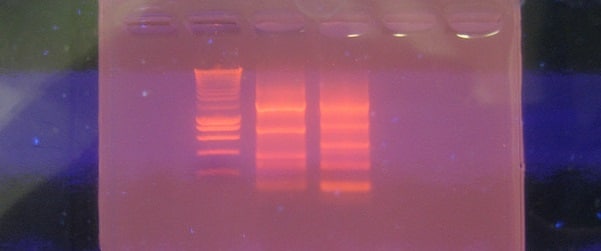
For several decades, Ethidium Bromide (EtBr) was the molecular biologist’s default dye for DNA staining. Now, EtBr is being consigned to the history books. It’s time to have a historical look at where it all started.
Need tips for surviving being the newbie of the lab, and what you can do to handle all the possible personality types you may encounter. Read on.

Interested in whether your protein uses oxygen to mediate reactions? Wondering if oxygen is keeping your enzyme from its duty? Then what you need as an anaerobic tent! These tips provide some basic knowledge to help you perform experiments using an anaerobic tent. What is an anaerobic tent? Most biologists who work in oxygen-free environments…

One of the most exciting things about being a scientist is doing experiments that have never been done before. Unfortunately, this can also be one of the most daunting aspects of science. Read on to make taking on your next experiment less daunting.
Normally you need two primers to amplify your segment of interest – one for the 3′ end of your segment of interest and one for your 5′ end. But if you don’t know the sequence of the regions you’re hoping to amplify this can be a problem! Rapid Amplification of cDNA Ends (RACE) is a…

Lab work, as we are all aware, comes with many pressures: one of which is productivity. You want to generate as much quality data as possible to meet publication deadlines or perhaps the elusive thesis. Sometimes it may feel like hours spent in the lab don’t match the amount of data produced: for some this…
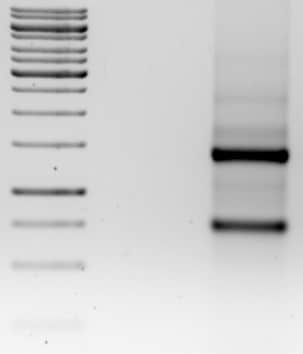
So, you’ve extracted your precious RNA and want to check its quality on a gel. Conventionally, you would run a formaldehyde gel, which is messy and requires a lot of prep. Plus, it is a huge undertaking in terms of time (and money) if all you want to do is just check the quality of…

This guide on qPCR for dummies explains the key differences between qPCR and traditional PCR, emphasizing the importance of controls, plate design, and DNA preparation. It covers planning your experiment, setting up triplicates, and managing data to ensure accurate and reliable results. With practical tips on dilution and data handling, this article helps beginners confidently prepare for their first qPCR experiment.
In part one, I discussed the ‘how to’ of simply freezing samples and the basics of vacuum evaporation, often referred to as speed vacing. Now, we’ll have a look at two more complex sample storage techniques (at least in terms of equipment) for drying samples (lyophilizaton and rotary evaporation) and the simpler method of blow…

Choosing a PhD topic can be very hard. There are a lot of things to consider from the subject to the supervisor. Here are some tips to help you choose. Find out what you really like This is the first topic because it is the most important. My first advice would be to get some…

You have a new plasmid, now what do you do? You are excited to go further with your project. But before you can move on, you have to confirm the presence of your insert as well as the sequence and orientation of the insert. Is the insert the right size? Most people use restriction enzymes…

Anyone working with laboratory animals has probably realized that simply putting two animals together does not always yield new offspring and reliable continuity of the animal line – unfortunately animal husbandry isn’t that simple! Of course, apart from making sure that the two animals put together are from different genders, there are a lot of…

Before I get into today’s topic, please allow me to digress a bit and start with a few sentences that sum up the polymerase chain reaction (PCR); the grand-daddy of molecular biology. PCR, a method that is at the heart of modern day molecular biology discoveries, is a process that amplifies genetic material through our…
In a previous article, we went over the basic understanding of the inner workings of a flow cytometer. It’s important to grasp the types of measurements that are being made and, perhaps more importantly, what measurements are NOT being made. For simplicity’s sake, we’re going to frame this discussion in terms of a classical flow…
Let’s face it, at least once in your lab life you are going to need a favor. You may need to go on vacation, you may be sick or you may just be a little overwhelmed at the bench. At least once, you will need to ask for a little help and someone will surely…

Having just finished graduate school, I have been given the privilege of nearly unlimited time to reflect (Yay! Unpaid, Boo!). Graduate school was, for me, a juxtaposition of intellectual growth, real-world learning and great fun. An introduction to adulthood with training wheels—while simultaneously being a blur of anxiety, work, sleepless nights and existential crises. I…

As a dual-degree MD/PhD student I spent two years in the medical school doing classroom learning, now I’m in the lab trying to get a PhD, and then in a few years I’ll return for the last two years of medical school and work in the hospital. In this process, I’ve heard a lot about…

After ten years of postdoctoral research there is one important piece of advice I would give to anyone embarking on a research career: Spend as much time managing your data as you do generating it Take time at the beginning of each project to organize how you will record what you are doing day-to-day. The…

PhDs have been known for their nightmarish effects on students’ psychological wellbeing, to the point that the acronym PhD has also been dubbed ‘Permanent Head Damage’, ‘Philosophically Disturbed’ or ‘Please Help. Desperate’. Doing a PhD is an emotionally exhausting experience rather than being physically challenging. Here are some tips on how to survive the PhD…
RNA sequencing (Wang 2009) is rapidly replacing gene expression microarrays in many labs. RNA-seq lets you quantify, discover and profile RNAs. For this technique, mRNA (and other RNAs) are first converted to cDNA. The cDNA is then used as the input for a next-generation sequencing library preparation. In this article, I’ll give a brief…

As a protein biochemist where bacteria were mere workhorses, imagine my surprise when I began work in a bonafide micro lab! I discovered that bacteria could be much fussier than my good ol’ cloning and expression friends E. coli DH5ɑ or BL21. One broth would not do for all, some even required blood! No, no,…
Few things can dash your hopes quite like phages. They can annihilate whole bacteria cultures in the blink of an eye, and make your next cloning or expression project impossible. But you can harness these evil-do-ers for good. And use phages to screen massive libraries of peptides. Learn how below. The Typical “Evil” Phage Experience…
Flow cytometry is a fluorescence-based technology, as is fluorescence microscopy and confocal microscopy. Fluorescence is fundamental to how a cytometer gathers data, but I am often surprised, as a core manager, at how little new users know about the process of fluorescence. So, this is where I always start the training process. Let’s get physical…
If, like many people, you use fluorescent proteins to view your transfection efficiency or your CRISPR gene editing, you can also isolate cells with different expression levels of fluorescent proteins. Here are 5 ways to improve your sorting experiment.

Most eukaryotic proteins exist as several isoforms, differing in posttranslational modifications, which allows them to perform slightly different functions or the same function under slightly different conditions. A common posttranslational modification of proteins is glycosylation.
When it comes to registering the signal output of your Southern/Northern/Western/probe hybridization, you are spoilt for choice these days. You can go all retro and use X-ray film. You can go digital and use a phosphorimager. Finally, you can go fluorescent and use a fluorescence detector. So, what are the pros and cons of each…

Recently, I have witnessed the uprising of various next generation sequencing (NGS) platforms and it’s quite interesting because each platform uses a different method. Previously, I’ve written about the exciting possibility of nanopore sequencing—a new sequencing technology based on the “signature” electrical currents generated as a single strand of DNA passes through the nanopore. The…

So it’s time to write up your thesis. By now, you probably consider yourself an expert on your topic or you hate the sight of it (or both!). Either way, hundreds of typewritten pages are all that stands between you and graduation/freedom. One of your first requirements will be to review the current knowledge on…

Mammalian cell culture techniques are not simple, and culturing the cells requires a lot of maintenance as well as patience. In addition, doubling times compared to bacterial cells can take days instead of hours, which is most evident when contamination occurs. However, implementing small-scale hollow fiber bioreactors for culturing mammalian cells can save a lot…

When restrictions come in the form of paperwork and approvals, we detest them. Whereas, when the restrictions come in the form of enzymes, we love them, don’t we? Restriction enzymes play a key role in biotechnology research. Read ahead for six useful facts about restriction enzymes. 1. Restriction enzymes are helpful to bacteria Restriction enzymes…

Enhance accuracy, reproducibility, and insight in 2D cell culture research.

The eBook with top tips from our Researcher community.