
If you’ve battled with transfecting primary cells or iPSCs, then you know the pain. Viral vectors bring monetary costs and biosafety headaches, while lipid nanoparticles bring sensitivity to temperature, batch variation and can even be toxic to your precious cells.
But now it looks like we can use a completely different approach, one that takes inspiration from how cells naturally organize themselves.
In this article, we’ll explore why peptide-based, lipid-free transfection methods could eliminate the need for tricky lipid formulations, cold storage, and the constant battle with batch-to-batch variation and what this might mean for your toughest transfection challenges.
The Downside of Lipid-Based Transfection
Lipid-based transfection has been a central method in cell and molecular biology labs for decades. The concept is simple: wrap your DNA or RNA in a lipid bubble, let it fuse with the cell membrane, and deliver your payload inside.
But in practice, it’s far more complicated. Making LNPs requires microfluidic mixing, precise pH control, and careful solvent handling. They need cold storage, they hate freeze-thaw cycles, and they can trigger inflammatory responses. For routine lab work, you’re often dealing with batch-to-batch inconsistency and frustrating toxicity in sensitive cell types.
Great for some applications. Limiting for many others.
Enter the Peptide Droplet
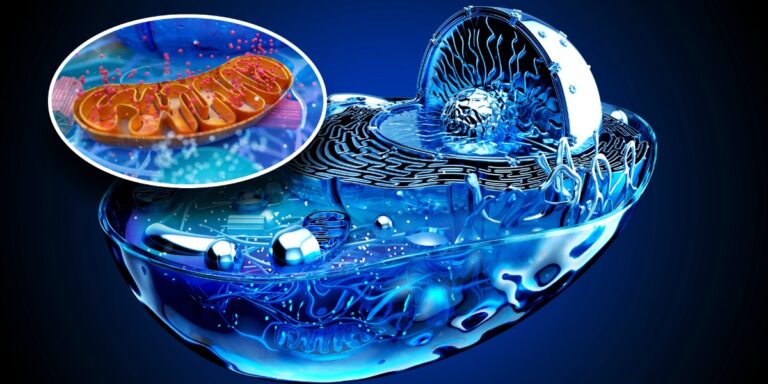
Here’s where cell biology offers a solution. Researchers in the field are increasingly recognizing the crucial role that biomolecular condensates play as facilitators of cellular processes such as transcription, DNA repair, signal transduction, and stress responses. They form when proteins and nucleic acids spontaneously condense into membraneless compartments through a process called liquid-liquid phase separation. Think of it like droplets filled with biomolecules inside the cell, but without any membrane at all.
Researchers at PartitionBio asked: could we engineer synthetic peptides that do the same thing?
Turns out that they could. They’ve developed short peptides that self-assemble into droplets when mixed with your cargo—DNA, RNA, or proteins—under specific salt conditions. No lipids. No organic solvents. No microfluidics. Just mix and go.
These peptide droplets deliver their cargo inside cells without the need for membrane fusion or viral machinery.
What This Means for Your Benchwork
The practical advantages of peptide droplets over lipid-based transfection are enticing:
- Stability. These formulations are stable at room temperature. No more scrambling to keep reagents frozen or dealing with cold-chain logistics.
- Simplicity. Spontaneous assembly means you just mix your peptide reagent with your cargo. That’s it.
- Reproducibility. Synthetic peptides are fully defined—no mysterious lipid mixtures or batch variation.
- Versatility. Early users report success with notoriously tricky cell types: pancreatic cells, iPSCs, and adipocytes. The system also handles CRISPR components and works in high-throughput formats.
- Diversity. The payloads can be diverse in size and nature, and are not restricted to charged nucleic acids—proteins and higher-order molecular assemblies work just as well.
How Do You Prepare for This Incoming Technology?
Keep an eye on progress at PartitionBio. Their first commercial product, BubbleFect, is already available as a beta program for research labs, and understanding where this technology is headed could inform your experimental planning.
Consider future possibilities. Think about how room-temperature-stable, lipid-free transfection might change your workflow. Could it enable experiments you’ve been avoiding because lipid reagents weren’t reliable enough? Factor these possibilities into your next grant proposal; funding agencies appreciate innovative approaches to persistent technical challenges.
Start documenting your current costs. Keep a list of what you’re spending on lipid transfection reagents, cold storage, and the time lost to batch variability and failed experiments. When it’s time to make the case to your PI for trying new options, having concrete numbers makes the conversation much easier.
PartitionBio’s long-term goal is to make this lipid-free delivery system available to developers of in vivo treatments for the delivery of genetic medicines. For labs tired of fighting with temperamental lipid reagents, that aspiration alone might be worth exploring.