
I’ve recently been lyophilizing biological extracts. While I was preparing for the experiment, I became interested in the number of methods available for drying, concentrating, and storing samples: freezing, freeze-drying, rotary evaporation, centrifugal evaporation, and blow-down drying.
Here is a brief description of each technique for biological sample storage to provide clarity and explain how they might be useful.
1. Freezing
This has the potential to be as simple as popping your sample in the –20ºC or –80ºC freezer; however, there are still a few things to bear in mind to maintain sample quality.
- DNA and buffers: for genomic material, where a little sheering (from ice crystal formation) is not a big deal, or for unstable buffers such as those containing DTT, this is great storage method with no adjustments required.
- Proteins: these are a just bit more tricky as you need to add an anti-freeze. Sucrose or glycerol can work well but the percentage depends (as always!) on the individual protein. I’ve often used 20% sucrose or 10% glycerol. Restriction enzymes can be stored in 50% glycerol to maintain stability. With its lower freezing temperature, this concentration of glycerol prevents the solution from freezing at all!
- Making aliquots: additionally, multiple freeze–thaw cycles can be detrimental, so it’s a good idea to aliquot your samples into appropriate quantities. This goes for DNA (when you want to avoid excessive sheering), most proteins and I also do this for unstable buffers. To take maximum advantage of your prep and minimize waste, aliquoting requires knowing the concentration of your sample and how much you are likely to need in future experiments, so that the aliquots are of an appropriate volume. For tiny volumes, PCR strip tubes, which snap off when the plastic is cold, work well. It’s a bit tedious, but well worth it.
- Microbes (bacteria, yeast and fungi): 10–20% glycerol works well. Higher percentages (i.e. closer to 20%) make for a softer stock, which is easier to sample quickly for streaking out on a fresh plate.
- Higher eukaryotic cells: these require a specialized protocol with time-controlled freezing and an anti-freeze such as DMSO. Details of the protocol depend on the cell line.
What is Flash Freezing?
Some macromolecules retain functionality better when flash-frozen prior to storage. Flash-freezing is the closest you can get to being a wizard and throwing (should I say gently dropping?) things in a cauldron.
Choose a free resource to help you move forward
CHEAT SHEET
Guide to Pipette Cleaning
EBOOK
Guide to Lab Safety
To flash-freeze, put on your wizard gear (lab coat, goggles, gloves), gather your sample aliquots and then drop them into a dewar containing a small amount of liquid nitrogen and watch it bubble and smoke (don’t do this in an area with no ventilation!). Once the bubbling has stopped, fish them out (a wire hotpot basket is good for this) and store at –20ºC or –80ºC.
2. Vacuum Concentration or Centrifugal Evaporation
Also known as ‘Speed Vacing’, because of the most popular instrument brand name, this involves centrifuging a sample to keep it in the tube while applying a vacuum that removes evaporating solvent (Figure 1).
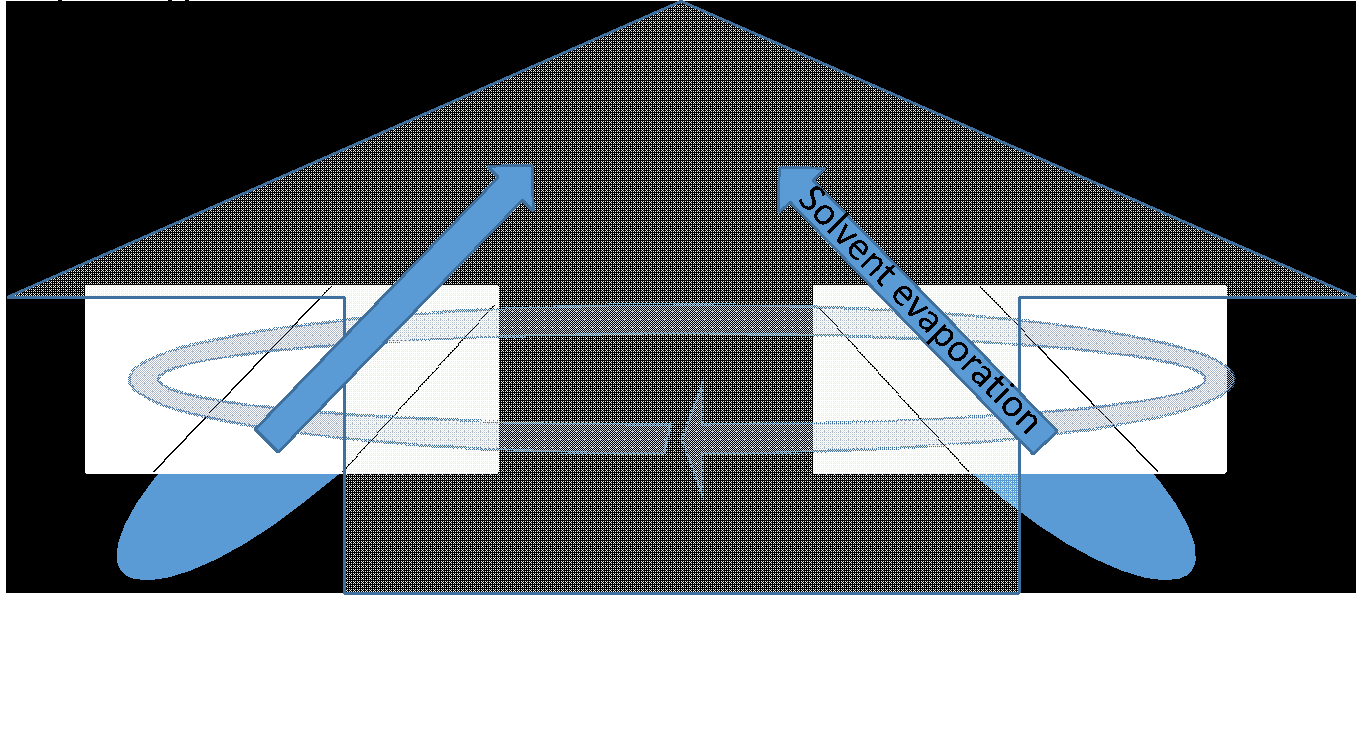
You can use it to either lower your sample volume, which will concentrate the macromolecules, or to remove all the solvent to leave a dried sample. The type of vacuum concentrator (sounds posh when you say it like that!) you need will depend on your solvent.
- Benign aqueous solutions are the simplest, needing only the centrifugal force and a vacuum.
- Organic solvents can be categorized into non-aggressive (e.g. ethanol, methanol, acetonitrile) and aggressive (e.g. chloroform, ethyl acetate, hexane), and other solvents include strong acids or bases, or solvents such as DMSO, which have high boiling points. Some of these will require the vacuum concentrator to have a coating on the interior of the instrument to prevent corrosion, vapor traps to collect noxious fumes or, in the absence of a vapor trap, outlets that end in a fume hood.
A note on heat-sensitive samples
The interior gets rather warm during the drying process, so watch out for heat-sensitive samples! Check on the solvent and instrument capabilities before you start – inadvertently poisoning your lab mates would be a sad way to end an illustrious scientific career. Thermo Scientific is a good resource for understanding more about vacuum concentration instruments.
3. Lyophilization (also called freeze drying)
Lyophilization is perhaps my favorite because of the fluffy white powder you get at the end and the stability of the resulting macromolecules. It also relies on sublimation (see Figure 1), which is when a solid turns to a gas without going through a liquid phase. I find this a magical concept!
Lyophilization is a versatile method that can be used to store macromolecules such as proteins, lipids and DNA, microbes like bacteria and yeast and, if you take enough care and can tolerate some loss in viability, mammalian cells. The physics and chemistry of lyophilization can be very particular and dependent on the type of sample.
Lyophilization Protocol
Below I describe the most basic aspects for aqueous solutions that can be frozen solid:
- To lyophilize a sample in an aqueous solution, freeze it overnight at –80°C. The smaller the volume, the faster the process, but it should be no larger than 35% of the vessels capacity (e.g. 17.5 ml max for a 50 ml tube). You can place the sample at an angle when you freeze it to increase the surface area.
- Once your sample is frozen, place it on ice and quickly cover with parafilm; remember to poke some holes in the film.
- Place the tube into the freezing flask and load it onto the lyophilizing machine. It sounds obvious, but make sure you know how to run the machine, especially when turning off the vacuum to collect your sample at the end of the process, or you’ll risk your sample being sucked up just like Augustus Gloop in the chocolate river.
- If you don’t get that last reference, read Charlie and the Chocolate Factory while you wait for your sample to be ready – a few hours to overnight, plus a few hours.
- To check that your sample is fully lyophilized, you can take out the tube and shake it gently. Any ice that remains will clink audibly, in which case you need to put it back on the machine – before it melts!
- Once your sample is dry, it does not matter if you are not there to take it off the machine right away. It’s quite happy sitting under vacuum. If in doubt about complete dryness, leave it on!
The above description applies to samples that can fit in a 1.5–50 ml tube. If you have a larger sample, you may need to use shell freezing.
What is shell-freezing?
Shell freezing involves rotating the flask containing your sample at an angle while it is held partially submerged in methanol mixed with dry ice or in liquid nitrogen. As the flask rotates the contents spread over the surface of the flask, increasing the surface area and freezing it layer by layer.
Increasing the surface area increases the speed of freeze drying. You may also need to use a cryoprotectant but again this depends on your sample.
4. Rotary (and Vortex) Evaporation
I think of this as hot drying in analogy with shell freezing followed by freeze-drying. Instead of freezing the sample under rotation and then applying a vacuum, the sample is heated under rotation while a vacuum is simultaneously applied (Figure 2).

Heating is done by partial submersion of the flask in a heated water bath. A vacuum is applied to lower the boiling point of the solvent, which has the advantage of keeping your sample cool too. As the solvent boils, the evaporated solvent filters up through a cold trap and condenses into a collecting reservoir. Rotation spreads the sample over the surface of the flask and accelerates evaporation.
The boiling temperature of the solvent under a certain vacuum strength and the amount of heat applied to the sample will determine how fast drying occurs. It is possible to make the boiling temperature so low that evaporation occurs when the temperature is too low for condensation to occur in the cold trap. The conditions used will depend on your sample and the solvent.
Rotary vs Vortex Evaporation
A rotary evaporator is generally used for a single larger sample. A vortex evaporator uses the same principles, but instead of rotation, the samples are vortexed. This is not like the little vortex machine you might have on your bench for vigorously mixing samples. Instead, it rapidly swirls the tubes sitting in a heated block to create a vortex so that your sample remains at the bottom of the tube during evaporation – a bit like vacuum evaporation. Several samples can be processed at once.
5. Blow Down Drying
This involves blowing an inert gas (usually nitrogen) at your sample until the solvent evaporates. It’s not much good with solvents, such as water, that have low volatility. This limits the sample type if you need it for more than analysis – most proteins don’t survive well in organic solvents, for example.
Additionally, it needs to be monitored to watch for dryness and if you aren’t careful and blow too hard, your sample will be splashed onto the sides of the vessel making it harder to recover, thus reducing yield (arghhh!). Thankfully, special tubes with a teat at the end can be purchased to help collect the sample at the bottom of the tube.
Some cooling of the sample occurs first, because as the gas goes from the high pressure inside the tank to atmospheric pressure in the room (adiabatic cooling) and second, because evaporation itself is cooling. Think of the lovely cooling effect of sweat!
To speed up drying, you can gently heat your sample on a heat block. I’ve used blow down drying for lipid fractions because it’s cheap, I could do it in a fume hood and it requires little equipment apart from a nitrogen tank, regulator and rubber tubing with a pipette tip on the end.
Final Thoughts
So we’ve discussed the ‘how to’ of simply freezing samples, the basics of vacuum evaporation and blow down drying, plus more complex sample storage techniques (at least in terms of equipment) for drying samples (lyophilizaton and rotary evaporation).
The method used will depend on the sample type, solvent type and what you want to do with it afterwards. Ultimately it will also depend on the equipment you have available or can scrounge, steal (did I say that?) or borrow.
You made it to the end—nice work! If you’re the kind of scientist who likes figuring things out without wasting half a day on trial and error, you’ll love our newsletter. Get 3 quick reads a week, packed with hard-won lab wisdom. Join FREE here.