
In theory, the greenhouse is a controlled laboratory environment where only the organisms you’ve introduced live. But in practice, just as other laboratory environments suffer from ‘unwelcomed guests’ (e.g. contamination and infestation), greenhouses are not always as sterile as you would like.
To avoid any experimental issues, you have to be vigilant about these pesky vermits. Don’t ignore the signs that not all is well in your greenhouse (i.e. spots on leaves, yellowing leaves, insects) in the hope that it’ll resolve itself. Take swift action as delay will compound your problem.
Of course, the easiest way to remedy any greenhouse infestations or contaminations is to safely dispose of the infected plants and soil, and disinfect the pots. However, this not always possible. The infected plants may be a crowning achievement of a 6-year breeding program – or your Ph.D. In this case, you need to determine the type of infestation and take appropriate measures. But be aware that any infection and its treatment will alter the plant’s physiology.
Viruses and Viroids
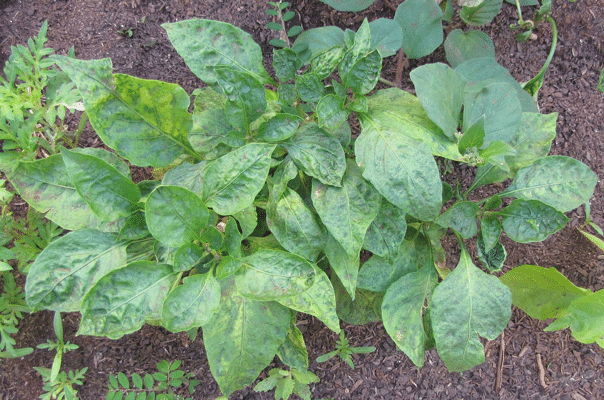
Viruses and viroids cause various spots on plants. They are difficult to properly diagnose and treat, so the first measure is to quarantine new plants before introducing them into the greenhouse. Unlike bacteria that are often infected only one species or non-resistant cultivars, viruses often infect several species. For example, maize dwarf mosaic infects sorghum and sugarcane, in addition to corn.
Choose a free resource to help you move forward
DOWNLOAD
Hemocytometer Cell Counting Helper Pack
POSTER
Cell Culture Posters
Insects, such as aphids, can be virus vectors. Measures for virus control and prevention include lab hygiene, including sterilization of tools and regular washing of lab coats.
Bacteria
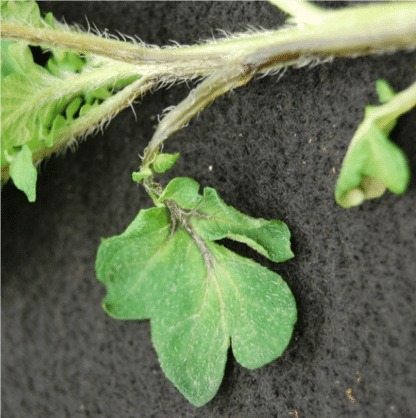
Phytopathogenic bacteria can also cause spots on stems and leaves. They stunt the growth and can kill the plant if untreated.
If the spot is black and doesn’t increase in size, you are in luck. This means that the plant cells died (necrosis) and prevented the spread of the disease. In this case, you can just remove the affected section, disinfect the removal site, and save the plant. But you need to treat the plant to prevent re-infection (see below)
However, if the spot is increasing in size and/or similar spots are appearing on the other part of the plant, the infection is spreading, usually using xylem or phloem. Use systemic treatment.
Bacterial diseases are difficult to control, so preventing the spreading of disease is emphasized. Copper compounds are a traditional way of treating bacterial diseases, but copper is a heavy metal that accumulates in the soil and will stunt and distort plants growth in the future. For many bacterial diseases, you can use antibiotics, such as streptomycin or oxytetracycline.
Fungi
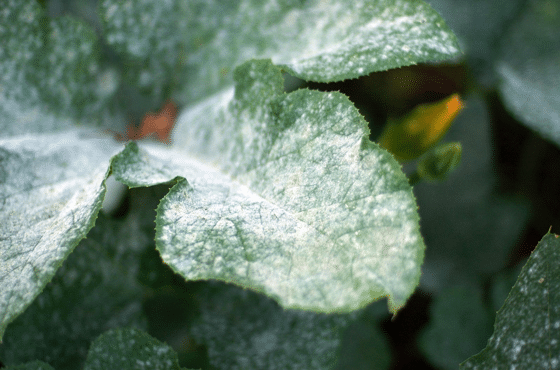
Collectively, fungi cause more plant diseases than any other group of plant pest, with over 8,000 species shown to cause disease. The most common disease of greenhouse plants is powdery mildew fungus that can be diagnosed by white powdery spots on the leaves and stems, especially close to the ground. In general, the diagnostic features of fungal infection are flour-like white spores on the leaves and long threads of fungal cells (hyphae) that you will be able to see between higher plant cells under a microscope.
While most phytopathogenic bacteria are non-spore forming, fungi spread their spores through the air. Moreover, while viruses and bacteria usually require an opening (wound) to infect the plant, fungi can force their way into the plant using special hyphae modifications called appressoria.
Fungi thrive in a humid condition with no air circulation. Thus, even using a fan to get air circulation will reduce the fungal diseases in your greenhouse. If possible, remove the lower leaves closest to the soil as it will increase air circulation.
It goes without saying that you need proper lighting in all the corners of your greenhouse. While some of the fungi do not care about light, most of them prefer dark places. Ensure that the soil has proper drainage, and a regularly monitored irrigation regime – maximum water is not always the best practice. Leaving plants standing in water for long periods encourages root rot.
If your crop or greenhouse has a history of the fungal problem, you can pre-treat seeds with fungicide and use it to treat the soil. However, it’s more efficient to apply fungicide before the symptoms appear.
Nematodes
Now we are moving from the realms of bacteria and fungi into the kingdom of animals that love eating plants.
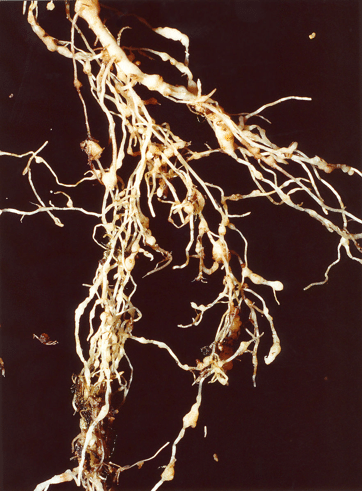
Nematodes are microscopic roundworms, relatives of the model organism C. elegans. Phytopathogenic nematodes live in soil and can attack roots causing root lesions, root tip damage, excessive root branching. As a result, the plant wilts despite enough moisture and declines despite all the nutrients available. Nematodes that live in bulbs and stems produce stem swelling and shortened internodes. Bud and leaf nematodes distort and leaf tissue.
If you suspect nematode infestation, you should examine affected plant parts under a microscope. Wriggling tiny worms are hard to miss in the plant tissue.
There are chemical nematicides but as they poisonous for plants as well, apply them carefully avoiding the roots. After an infestation, all the soil should be fumigated or autoclaved.
Mites
Mites are not actual insects but are classed as a type of arachnid, relatives of spiders, ticks, and scorpions. They can be microscopic or noticeable by a naked eye. Soil mites are harmless, but there are also pests such as spider mites, broad mite, tarsonemid or cyclamen mites.
Mites usually leave in colonies and damage plants by piercing the cuticle and sucking out the content. Losing cytoplasm leads to stems and leaves shrivelling and falling off.
The treatment measures include prune infested parts of plants and discarding them. Don’t hesitate to pull entire plants to prevent the mites from spreading to its neighbours. Insecticides that are geared up towards insects, don’t work on mites (or they develop resistance), so use organic control measures, for example, spray with neem oil.
The next section will introduce you to the most common types of insect pests that plague most greenhouses: fungus gnats, aphids, scale insects, and mealybugs.
Sciarid Flies or Fungus Gnats
Fungus gnats are small, 2 – 8 millimeters flies that belong to six families of the superfamily Scaroidea. The white larvae of most species feed on fungi growing in soil. They do little damage to healthy plants, so the appearance of fungal gnats may not be as bad as it looks. However, the presence of gnats is an indication that the soil is too moist and the plant may be experiencing root rot.
The flies can be caught using yellow sticky flypaper. But you need to remove the source of the adult flies by stopping larvae hatching. Larvae are killed by dry soil. Additionally, you can put sand on top of the substrate, which will preclude the laying of new eggs.
One common and effective treatment is the addition of diluted hydrogen peroxide (3% hydrogen peroxide mixed with four parts water) to the soil. This application also counts as watering, which you want to do sparsely anyway.
There is also biological control by mite Hypoaspis miles and bacteria Bacillus turingiensis, but you probably don’t want to introduce even more organisms into your experiment.
Aphids

Aphids are small sap-sucking insects of the superfamily Aphidoidea. Aphids are soft-bodied and pear-shaped insects with long legs and antennae. Depending on the color they are called greenfly, blackfly, or whitefly; however, individuals within a species can vary widely in color, and the color of the insect usually matches the plant they feed on.
Aphids spread by a winged form that is replaced by the wingless insects that reproduce parthenogenetically. Aphids suck the sap out of plant phloem and excrete an excess of sugar attracting ants and creating conditions for black mold development.
Unlike sciarid flies, aphids do real damage to plants. A combination of high reproduction rate and active sucking of sup with nutrients usually leads to severe deterioration or even death of the plant.
You can try controlling aphids with a systemic insecticide. As with the antibiotic treatment of bacteria, it’s important to use the recommended dose of the insecticide and treat thoroughly as aphids can develop resistance to carbamates, organophosphates, and pyrethroids.
Spraying plants with water jets can be effective in the control of aphids, especially if the water contains insecticide soap. However, some plant species are sensitive to soap. If using water, you need to make sure to spray the entire plant, including the undersides of the leaves. And you will have to do it several times on consecutive days, as just one bug can exponentially reproduce quite rapidly.
An alternative to insecticidal soap is neem oil that is successfully used to control pests including in organic conditions.
Biological control of aphids includes:
- Ladybird (ladybug) beetles: One or several are not enough, you need to apply a high number bought from specialist suppliers.
- Parasitoid wasps
- Fungi: i.e. Isaria fumosorosea, Lecanicillium lecanii or Beauveria bassiana.
Scale insects

Scale insects are several millimeters in length and look like little turtle shells attached to plants and don’t move, making it difficult to recognize them as insects. The female scale insect extrudes a waxy substance that covers them, and male insects have wings and are short-lived for days, just as male bees in comparison.
Like aphids, scale insects feed on sap, and they can penetrate wooden stems.
The waxy shell of the female scale insect protects them from contact insecticides that are effective only against young form with thin cuticles. However, it’s possible to use systemic pesticides that act from within the plant sap.
Because the scale insects don’t move, it’s possible to remove them mechanically using a detergent such as insecticidal soap. Horticultural oils such as neem oil are also used to suffocate the insects.
Mealybugs
Mealybugs belong to the same insect superfamily Coccidea as scale insects. They have an ovoid shape but don’t secret the waxy hard substance that covers individual insects. Instead, they secret a white powdery substance (the origin of the name mealy) that protects one or more insects. Some species lay eggs in the substance. Like scale insects, mealybugs have sexual dimorphism – females are wingless, while small males have wings. Unlike scale bugs, females can move.
There are two types of mealy bugs that infest greenhouses: one that lives in soil and one that lives on the above-ground parts of plants. You can control the above-ground species with the application of systemic insecticide (i.e. diazinon). Systemic insecticides require repeated use and may not work on larger plants due to the decreasing concentration of the active compound in the peripheral parts of the plant.
Local application of 50% v/v isopropanol, 2% w/v SDS aqueous solution is usually effective in the removal of insects. Isopropanol dissolves the outer insect cover while SDS kills the insect. You can also use insecticidal soap.
Mealybugs in the soil are less visible and are harder to treat. If possible, destroy the plant and soil. Alternatively, you can also remove the plant, carefully wash the roots, and replant into the new soil.
Biological control of mealybugs includes the application of the fungus Lecanicillium lecanii or ladybirds.
In conclusion
Finally, whatever invisible bug is bug eating your experiment, don’t forget to determine the infection pathway – water, infected plant material, soil, tools – and terminate the spread of an infestation. Remember that most pathogens can lurk in soil for years and re-infect. Leave detailed description of what happened and how you dealt with it in your lab book.
Sources
- The Ohio State University has produced a series of useful fact sheets that can be an introduction into plant diseases.
- George Nicolas Agrious. Plant Pathology. Elsevier Science Publishing Co Inc (2005) ISBN10 0120445654
- George Nicolas Agrious. Plant Pathology. Elsevier Science Publishing Co Inc (2005) ISBN10 0120445654
- Pundt, L. (2011). “Managing Aphids in the Greenhouse”. University of Connecticut College of Agriculture, Health, and Natural Resources.
- Itino, T. et al. (2008). “An ancient tripartite symbiosis of plants, ants and scale insects”. Proceedings of the Royal Society B: Biological Sciences. 275: 2319–26. doi:1098/rspb.2008.0573.
You made it to the end—nice work! If you’re the kind of scientist who likes figuring things out without wasting half a day on trial and error, you’ll love our newsletter. Get 3 quick reads a week, packed with hard-won lab wisdom. Join FREE here.


