
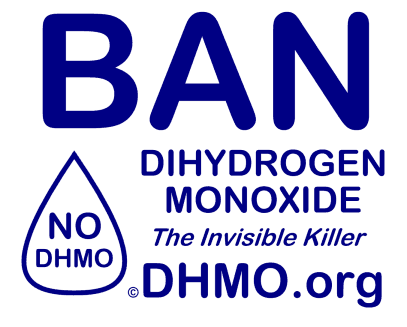
 Please read and pass this life-saving information on to your friends.
A chemical that all of us use in the lab has turned out to be highly dangerous. It is an asphyxiant, can cause severe burns and is a contributor to the greenhouse effect. Medical organizations all over the world confirm it to be responsible for killing thousand of people, of all ages, every year.
Although there is no confirmed causative effect, there is also evidence to suggest that it is involved in the formation of cancer and has been found in excised tumors of EVERY kind.
Yes, spread the word. Dihydrogen monoxide, or hydric acid, is the silent killer that each of us are exposed to every day. If you need any further convincing, please visit the dihydrogen monoxide research division for further information.
Choose a free resource to help you move forward
POSTER
Lab Safety Poster
EBOOK
Guide to Lab Safety
But don’t worry. Safe alternatives and are already being developed and will be available soon… or if you feel compelled to continue to use dihydrogen monoxide you will also be able to buy disposal kit to minimize your impact on the environment.
Ok, so it’s a spoof. But interestingly, everything I have written (apart from the part about safe alternatives and disposal!), and everything on the dhmo.org site, is 100% accurate. It’s easy to see how, in the absence of critical thinking on the part of whoever receives this information, the fear of dihydrogen monoxide, or hydric acid (or water, just in case you didn’t get it yet) could be worked up into a hysteria.
But as scientists, inherently critical thinkers, we would never allow something like this to permeate into the scientific community, would we? We would never blindly accept a scare story like this, without examining the evidence. And we would certainly never allow blind acceptance to develop into such a hysteria that we would spend good money expensive “safe” substitutes and “environmentally friendly” disposal methods for our already safe, cheap and useful chemical.
Well, what about ethidium bromide? The popular myths about the dangers of ethidum bromide are just that – myths. There is no evidence to implicate ethidium bromide as a carcinogen or a mutagen in humans, and in fact there is evidence to suggest that it is perfectly safe.
If you feel the need to perpetuate the myths and the hysteria, about ethidium bromide you are free to do so. But before you do, it is your responsibility as a scientist to do one thing – read the evidence. If after doing so you still think that ethidium bromide is unsafe, then continue as you were – but don’t be guilty of blind acceptance. That’s just not science.
Looking for a good place to start your investigation of whether ethidium bromide is safe or not? Click here.
You made it to the end—nice work! If you’re the kind of scientist who likes figuring things out without wasting half a day on trial and error, you’ll love our newsletter. Get 3 quick reads a week, packed with hard-won lab wisdom. Join FREE here.


