10 Ways to Work RNase Free
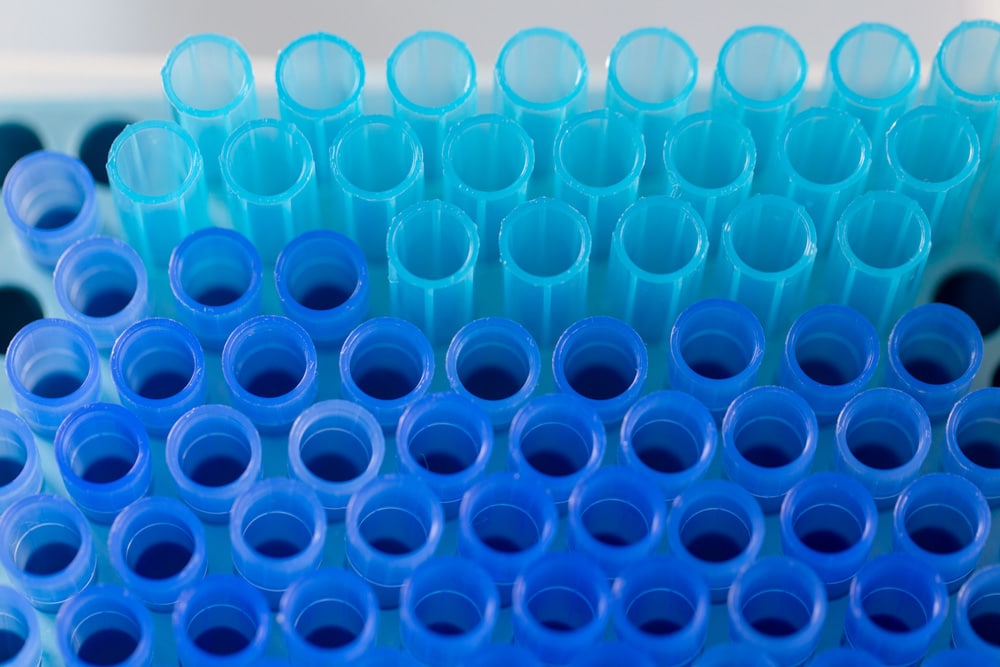
Working with RNA? What fun! Those little, nearly indestructible RNases are everywhere – on your skin and mucous membranes, in the water and (some of the) enzymes you use, on lab surfaces, even in airborne microbes! Here are 10 ways to keep the RNases at bay, and keep your precious samples safe:
1. Clean everything; bench surfaces, pipettes, electrophoresis equipment and anything else you can think of with an RNase cleaning product, such as RNaseZap from Ambion (or 0.5% SDS followed by 3%H2O2). Establish a regular cleaning routine; a quick daily clean and a deeper weekly or monthly clean… and stick to it.
2. Treat your solutions. Good old DEPC is a fine way to keep your solutions RNase free. Use 0.5 mL DEPC/L, incubate for 2 hr, autoclave for 45 minutes minimum. DMPC can also be used and may be be safer than DEPC, which is a known carcinogen. Alternatively, many vendors offer certified nuclease-free water, which may be worth the investment. Note that ultrafiltered water is already RNase free so does not need DEPC treatment. Also, don’t use DEPC/DMPC on tris-based solutions.
3. Designate a workspace, and a set of pipettes, if possible, that are dedicated to RNase-free work.
4. Use barrier tips. Barrier tips stop cross-contamination of your reagents and samples by preventing aerosols reaching the barrel of your pipette. They are a must-have for RNA work.
5. Wear gloves and a lab coat. The obvious ones are the best. Gloves and a lab coat will stop you from contaminating your samples with your own RNases. Change both frequently (maybe once per week for lab coats). Also, when you have your gloves on don’t touch anything that is not decontaminated – door handles, taps, yourself… or other people (!).
6. Bake your glasswear. No enzyme can withstand baking for 300°C for 2 hours, but your glasswear can.
7. Isolate RNA using a method that eliminates endogenous RNAses, such as AquaRNA from Multitarget Pharmaceuticals, which is both clean and convenient.
8. Use RNase-free enzymes. Enzymes isolated from bacteria (e.g. DNase) can be full of RNase. Make sure you use certified RNase-free enzymes on your RNA samples where possible.
9. Use an RNase inhibitor when it’s not possible to keep things completely RNase-free. Roche’s Protector is a good example. Avoid high temperatures (above 60°C) or denaturing conditions that could deactivate the inhibitor!
10. Store RNA in ethanol at -80°C. Make aliquots if the sample is to be used a number of times to avoid freeze/thaw cycles. Before use, centrifuge to pellet the RNA, air dry then resuspend in an RNase-free buffer.
11. Be completely paranoid, work as far away from your colleagues as possible, and shower in RNaseZAP five times per day. Just kidding.
4 Comments
Leave a Comment
You must be logged in to post a comment.
Hi,
In the first way, you suggest that use 0.5% SDS followed by 3%H2O2 to remove RNase from bench surfaces, pipettes, and anything else. Do you have any documents that prove the effectiveness of this method?
Thanks.
Hi, thank you for your comment. While I am not the post author, I had a quick search for the documents you suggested and couldn’t find anything. Probably, no one has bothered to test this empirically because H2O2 is a potent oxidizer and consumer- and industrial-grade antiseptic at 3-6%.
Note also that NEB and Roche also recommend 3% H2O2 to remove RNase:
https://www.neb.com/en-gb/tools-and-resources/usage-guidelines/avoiding-ribonuclease-contamination
https://lifescience.roche.com/global/en/article-listing/article/precautions-for-handling-of-rna.html
Hey,
If the tubes r RNAs&DNAse free isn’t need to autoclavate.
To freeze already in Trizol is a good option. Try to dissect and put imediataly in Trizol and freeze.
Good luck
Very good advice. I am working with human muscle from the vastus lateralis. We rinse in RNase free water and snap freeze the tissue in Liquid Nitrogen for RNA extraction at a later date. The cryovials are labeled RNase free and are autoclaved prior to use. However, we are getting very low yields of RNA from these samples.
Should we add Trizol to the muscle prior to freezer?
Any suggestions are welcome.
Thanks