We all know reproducibility is a serious issue in science. While most reproducibility issues are honest errors, unfortunately, some are fraud, and AI tools are making scientific deception easier than ever.
In this article, I’ll focus specifically on image manipulation and suggest what you can do to protect your work and science in general.
Traditional Image Manipulations vs. AI-Image Manipulation
Historically, image fabrication in science was a highly skilled process undertaken by researchers willing to invest significant time to deceive others. But open access to AI-image generation tools means that convincing scientific images can now be created with much less technical skill.
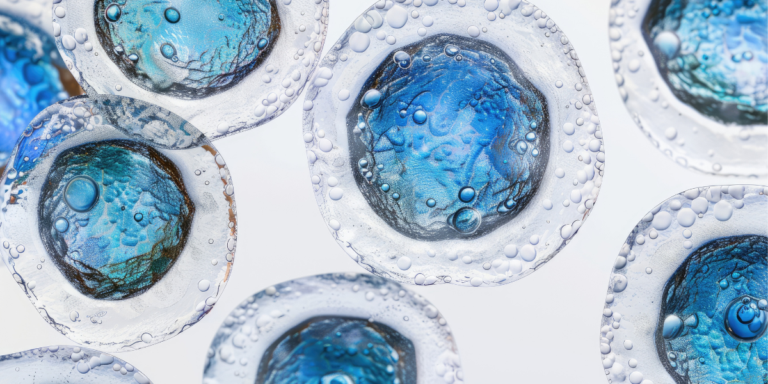
AI models can synthesize highly realistic fake scientific images, such as cell cultures or tissue samples, that follow the visual patterns of real data and are harder to detect than manual manipulation. These technologies can also be used to manipulate existing images without leaving the distinct artifacts typically caused by manual editing.
Scientific AI-generated images are harder to detect
Contrary to what we might want to believe, humans are not good at spotting AI-images. Studies examining our ability to distinguish AI-generated microscopy and cell biology images from genuine ones found that experts tend to rate AI-generated images as more likely to be real than non-AI images.
Choose a free resource to help you move forward
CHECKLIST
Manuscript Summary Template and Checklist
eBook
Free Guide to PCR
It is also harder to detect AI-generated images using traditional fraud detection methods. Common signs of non-AI image modification include:
- Repeated pixel blocks
- Inconsistent JPEG compression artifacts
- Clone-stamp traces
- Brightness gradients that don’t match a real imaging context
But AI’s end-to-end image generation process means there is no single original image, no duplication, and therefore no telltale artifacts.
Why Scientific AI-Images Are Difficult to Detect
Because generative AI models sample from a learned distribution, the visual noise injected at each processing step means that no two images share repeating elements that would be flagged by conventional forensic tools. This does not mean all irregularities are undetectable, but it does mean that conventional methods are less effective when applied to them.
Automated detection tools do exist and are improving, but their accuracy against scientific imagery remains limited, particularly as generative models advance and as bad actors learn to counter detection methods. Tools that perform well on natural photographs also struggle with domain-specific scientific imagery. For example, a model trained on faces does not transfer readily to confocal microscopy stacks.
The Real Problem: Peer Review Was Never Built for Fraud Detection
To make matters more complicated, the current peer-review system was not designed to detect fraud. Instead, it was designed around an assumption of scientific good faith. This was always a somewhat vulnerable arrangement, but it functioned adequately in a world where fabricating convincing scientific imagery required significant effort and left detectable traces. There are two problems created by AI that the current review system was never designed to handle.
1. It’s easier than ever to fake results
Reviewers are expected to evaluate methodological soundness, interpret results, and assess novelty rather than investigate legitimacy. They are not forensic investigators and do not have access to raw data, instrument logs, or original image files.
The widespread availability of AI-image generation tools means that fabrication is now more accessible than ever before. Combined with the ability to automate image-generation workflows, the process of creating these images is also more scalable.
2. It’s easier than ever to write papers
Review systems are operating under significant volume strain with the advent of Large Language Models (LLMs). It’s easier than ever to write large volumes of text, meaning reviewers are handling more scientific manuscripts than ever before.
The cognitive bandwidth available for anything beyond substantive evaluation was always limited. So the assumption that reviewers can simultaneously assess a paper’s scientific merit and conduct meaningful fraud forensics is even more unrealistic.
The Solution: What You Can Do to Fight AI Fraud in Science
The limitations of peer review mean that fraud detection cannot remain centralized under the current system. Meaningful integrity protection now requires a distributed layer that includes the broader research community (i.e., you!)
This is not how most researchers think about their role. Reading a paper, you are primarily evaluating the methodology, assessing claims, and deciding whether findings are relevant to your work rather than questioning the validity of the results. But post-publication scrutiny is the most powerful error-correction mechanism science currently has.
Each member of the scientific community who reads a paper and notices something anomalous has relevant information that no automated system possesses: domain expertise, familiarity with what real images in a particular imaging modality look like, and contextual knowledge about whether the results fit what the field knows.
What Changes in Your Workflow
If you accept that fraud detection is now partly a distributed responsibility, some aspects of how you evaluate published work will change in practice.
|
Action |
What you’ll do differently |
Why you’ll change |
|
When reading an image-heavy paper… |
You’ll actively ask whether what you are seeing is consistent with what the biological samples actually look like |
Anomalies you might previously have attributed to poor imaging or unusual samples now have another possible explanation |
|
Before using a paper’s findings as the foundation for your own work… |
You’ll evaluate image quality as part of your evidence assessment. When suspicion is sufficient, you’ll use the appropriate reporting pathway |
You know that unusually smooth textures, implausible consistency, and internal repetition patterns could be anomalies |
|
When working in the lab… |
You maintain awareness of raw data retention practices, keeping instrument logs, original image files in lossless formats, and metadata that timestamps acquisition |
In an environment where image integrity is increasingly scrutinized, this protects you and the credibility of your work |
How to Review Papers and Protect Your Work
How much scrutiny a paper deserves depends on why you are reading it. If you are skimming for a broad overview, a quick figure scan, and a PubPeer check are enough. If you are about to build a hypothesis on a specific paper, commit significant bench time, or order reagents based on its methods, go through all five steps below. The investment is small relative to the time it can save you.
1. Sanity-check the figures (2 to 3 minutes)
Open the paper and zoom into each figure. Compare panels side by side for duplications or inconsistencies. Look for images that appear in other papers from the same group. Tools such as ImageTwin (and their competitor Proofig) can assist with this, but your own eyes remain a useful first pass.
2. Check the paper’s reputation (2 minutes)
Search for the paper on PubPeer before you commit significant time to it. PubPeer is a post-publication peer review platform where scientists flag data concerns, and a surprising number of problematic papers have already been annotated there. Check whether the paper has been the subject of an expression of concern or retraction notice.
3. Look for independent confirmation
Has anyone successfully reproduced the article’s key findings? A single high-citation paper with no independent replication is weaker than one in which the core results appear across multiple independent labs. Replication is not always available, but it is worth checking before you commit.
4. Ask for raw data in high-stakes cases (5 minutes to send, then wait)
If you are about to commit significant resources to a line of work, requesting the original high-resolution raw images is perfectly legitimate. Generative AI currently struggles to produce large-sized, high-fidelity raw data images, so the response is absent or evasive, factor that into your assessment.
5. Trust your instincts and normalize skepticism
If something about a paper’s data feels off, your gut instinct is worth taking seriously. Healthy skepticism is good scientific practice, and you are not obligated to assume a paper is reliable simply because it has been published.
How to Escalate Your Concerns if You Spot Suspicious Results
Consider a hypothetical example: You are reviewing a paper in your area. Perhaps evaluating it as the basis for a grant proposal, or deciding whether to use its findings to justify a methodology in your own work. In the histopathology panel of Figure 3, you notice a region that appears internally repeated, or a texture with unusual consistency across what should be heterogeneous tissue. However, you cannot be certain, as you are not a forensic expert.
In this scenario, you have two choices:
- You say nothing. But if the image is fabricated, then your research is built on findings that cannot be replicated. The downstream translation of your research to patient studies rests on a nonexistent foundation, and funding will be misdirected. In the most serious cases, clinically relevant conclusions drawn from fabricated data could pose downstream risks to living patients.
- You report it. But if you report and this is a genuine artifact you misread, you risk reputational exposure for the authors, yourself, and waste time invested in a process that yields no finding.
How to correctly report your concern
The good news is that reporting a concern about a published image does not require certainty. PubPeer is the most established platform for post-publication peer-review comments, including image-related concerns.
The platform even allows anonymous posting and applies moderation standards that require comments to be verifiable. This means concerns should be grounded in what can be seen and described (fact) rather than guessing the author’s intent.
A practical sequence for raising a concern:
- Extract and annotate. Download the relevant figure. Using any standard image annotation tool, clearly mark the region of concern. If the issue is internal repetition, indicate both regions and their apparent similarity. If it is a textural anomaly, indicate where it occurs and describe exactly what you observe.
- Write a short, objective comment. The comment should describe what you observe in the image, not what you infer personally about the authors. “Regions A and B in Figure 3C appear to share identical pixel patterns inconsistent with biological heterogeneity” is a verifiable statement. “The authors fabricated this image” is not.
- Avoid attributing intent. You do not know whether an anomaly reflects fabrication, a processing error, or a feature of the imaging you have not accounted for. Describing what you see preserves the factual basis of the concern and makes it more likely to be acted upon.
- Decide on anonymity. PubPeer permits anonymous posting. Unfortunately, this carries less weight with some editors and is harder for the community to assess without knowing the commenter’s domain expertise. Named comments carry more weight but create greater personal exposure. Neither choice is universally correct; it’s a matter of personal preference.
- Consider contacting the journal editor directly. This is particularly appropriate when the concern involves data cited in clinical guidelines, when a correction or retraction appears urgent, or when you have direct domain expertise that makes your concern more specific.
This pathway is not confrontational, as you are providing facts for the system to evaluate. This is a meaningful contribution regardless of the ultimate finding.
To Report, or Not to Report? That is the question
It would be dishonest to present reporting as cost-free. You must make the decision to report with honest information about what it involves, rather than not on a romanticized version of scientific truth-telling that ignores personal risk. Here are some factors to consider before deciding whether to report a finding or not:
Career retaliation
Career retaliation risk exists, particularly for early-career researchers or those in fields with strong hierarchical dynamics. Authors who are called into question may respond to the person who raised the concern, and institutional pressures can discourage rocking the boat. Especially if the paper in question comes from a prominent lab or well-funded group.
Harrassment
Unfortunately, researchers who have raised public concerns have experienced sustained harassment from authors and their networks. Anonymous posting reduces this exposure but does not eliminate it.
Time and emotional burden
Preparing a documented comment, navigating the PubPeer moderation process, and corresponding with a journal editor are not trivial investments, particularly when the outcome is uncertain.
Silence also has consequences
Scientific misconduct damages the credibility of the institutions that published and certified the work, misdirects funding, and increases the cost of eventually establishing what is true. In clinical domains, it has even harmed patients.
That damage has traditionally been understood as the direct consequence of the person who committed the fraud. But when researchers who notice anomalies fail to report them, the paper continues to accumulate citations, and the findings continue to shape grant decisions and clinical thinking.
Final thoughts
Estimates suggest large numbers of problematic papers enter the biomedical literature each year. Odds are, fraud is something you may encounter in routine literature searches. It also means that the paper you are using to design your next assay might never have been based on real data.
The question facing any researcher who encounters a suspicious result is do I document this concern and route it into the system? The reporting pathway described here is the mechanism that best protects you, the authors, and scientific integrity.
You made it to the end—nice work! If you’re the kind of scientist who likes figuring things out without wasting half a day on trial and error, you’ll love our newsletter. Get 3 quick reads a week, packed with hard-won lab wisdom. Join FREE here.