New Channels on Bitesize Bio

To help you find information on exactly what you need we're implementing channels, a new way to browse content

Each channel is focused on a specific technique or area and authored/presented by hand-picked authors who are experts in their field. Make sure you don't miss a thing by checking the box below for each channel that interests you.

In return we'll send you one email per month that brings you the latest from your chosen channel(s), along with free members-only content.

Check out our upcoming new channels; Flow Cytometry and Cell Culture, we'll be launching them very soon!

I would like to receive the newsletters for the following channels

Cell Culture
Flow Cytomery
Microscopy & Imaging
Next Generation Sequencing
Writing, Publishing and Presenting
Cloning & Expression


My email address is:

Zebrafish: Making Development Transparent

by in Misc
From the Bitesize Bio channel

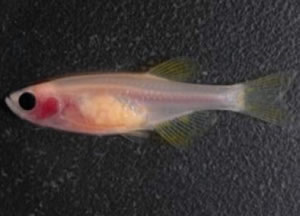
transparent zebrafishWith the recent development of transparent Zebrafish, allowing scientists to directly view its internal organs, and observe processes like tumor metastasis and blood production after bone-marrow transplant, it seems appropriate to describe Zebrafish as a model organism.

Zebrafish (Danio rerio), a native to freshwater streams in Southern Asia and a common aquarium pet, is studied because its embryos are transparent and later developmental stages are therefore easily resolved. As a vertebrate, it is at least partly representative of other vertebrates, its life cycle is rather simple, and genetic manipulation is relatively straightforward. The most useful aspect of studying development in this fish however, is that its embryo is transparent (an unusual characteristic for a vertebrate) and thus scientists can observe later developmental stages, particularly relating to neurobiology. This fish is also useful in studying organ function, behavior, and toxicology.

Zebrafish embryonic development provides advantages over other vertebrate model organisms. Although the overall generation time of zebrafish is comparable to that of mice, zebrafish embryos develop rapidly, progressing from eggs to larvae in under three days. The embryos are large, robust, and transparent and develop externally to the mother, characteristics which all facilitate experimental manipulation and observation. A common reverse genetics technique is to reduce gene expression or modify splicing in zebrafish using Morpholino antisense technology. Morpholino oligonucleotides are stable, synthetic macromolecules that contain the same bases as DNA or RNA; by binding to complementary RNA sequences, they reduce the expression of specific genes.

While Drosophilia introduced Homeobox genetics to animal development, Danio made accessible the integration of genetics with classical vertebrate embryology.

  1. Solnica-Krezel L. (1999) Pattern formation in zebrafish–fruitful liaisons between embryology and genetics. Curr Top Dev Biol., 41:1-35. PMID
  2. Zebrafish Model Organism Database (ZFIN)
  3. Zebrafish (wiki)

Articles in your inbox

Enter your email to be informed when we publish more articles like this on BsB, and also get access to all of these goodies:

  • Free ebooks and audiobooks on the topics that matter to you
  • Access to Member’s-only articles and Videos
  • Advance notice of new webinars and eBooks
  • Access to make comments and ask questions on BsB


What to read next

Worms: Models of Development

Continuing with the recent theme on model organisms, there is the nematode (roundworm) Caenorhabditis elegans. This organisms is particularly useful owing to the fact that it has very defined development patterns involving fixed numbers of cells, and it can be rapidly assayed for abnormalities. Further, strains are cheap to breed and can be frozen. When [...]

Xenopus as a Model for Early Development

Another popular model organism is the African Clawed Frog, Xenopus laevis, which is extremely useful for studying development and cellular physiology, owing to its particularly large and easy manipulable oocytes and embryo. The oocytes provide an important expression system – By injecting DNA or mRNA into the oocyte or developing embryo, scientists can study the [...]

Brahe’s Battle: Kickstarting Science With Rap

“Science” and “rap” are not the two words I expected to find in one sentence. How very small-minded of me. Much to my surprise I discovered that in 2010 Bitesize Bio had a BioPop Rap Battle between nationally-recognized Tom McFadden and a relative newcomer, Science Rapper. In this epic battle between the Cassius Clay and [...]

It’s Like Getting RNA from A Blood Sample

So you have some blood stored in the -20C or -80C and you want to isolate RNA from the samples. If you wanted DNA, you would have many products to choose from. But for RNA, your choices are more limited. Obtaining RNA from frozen blood is difficult Why is that?  The reason is that most RNA [...]

About the author

What do you think?

One comment

  1. from on

    One important things about zebrafish is that while the overall generation time is similar to mice (~6-8 weeks from fertilization to breeding), the reproductive numbers are not. While 1 mouse pair might produce 3-10 pups in a breeding cycle, 1 zebrafish pair could produce 100 (or more) embryos. Additionally, the same two fish can be bred again in just a couple of days with similar production. You can imagine how quickly the numbers can add up.

    And the biggest advantage for the neurobiologists among us is that the zebrafish is able to regenerate CNS neurons (including within the retina) as well as fins and even portions of the heart. The retinal regeneration is especially cool, when you take into account how similar the zebrafish retina is to diurnal mammalian retinas (including the human retina!)

Subscribe to Channels

To receive information about any of our new channels click on the button below.
subscribe to the channel newsletter »

Write for us

Have a short tip, a written
article or a video you'd like
to see published?
write for us »