
New Channels on Bitesize Bio

To help you find information on exactly what you need we're implementing channels, a new way to browse content

Each channel is focused on a specific technique or area and authored/presented by hand-picked authors who are experts in their field. Make sure you don't miss a thing by checking the box below for each channel that interests you.

In return we'll send you one email per month that brings you the latest from your chosen channel(s), along with free members-only content.

Check out our upcoming new channels; Flow Cytometry and Cell Culture, we'll be launching them very soon!

I would like to receive the newsletters for the following channels

Cell Culture
Flow Cytomery
Microscopy & Imaging
Next Generation Sequencing
Writing, Publishing and Presenting
Cloning & Expression


My email address is:

Model Organisms in Biomedical Research

by in Misc
From the Bitesize Bio channel

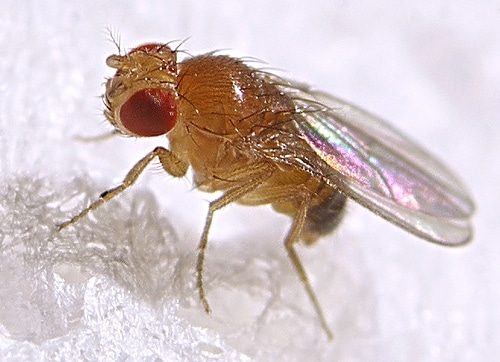
fruitflyThe term “model organism” is often used in research, to describe species that are extensively studied to understand particular biological phenomena. We say “model,” because there is usually the expectation that discoveries made in the organism model will be representative of related taxonomic groups. In particular, model organisms are widely used to explore potential causes and treatments for human disease when human experimentation would be unfeasible or unethical. For instance, a it may be difficult or impossible to visualize cellular processes in mammalian embryos; and the manipulation of human subjects is tightly regulated for obvious reasons. This strategy is made possible by the common descent of all living organisms, and the conservation of metabolic and developmental pathways and genetic material over the course of evolution.

There are many model organisms. One of the first model systems for molecular biology was the bacterium Escherichia coli, a common constituent of the human digestive system. Several of the bacterial viruses (bacteriophage) that infect E. coli also have been very useful for the study of gene structure and gene regulation (e.g. phages Lambda and T4). However, bacteriophages are not organisms because they lack metabolism and depend on functions of the host cells for propagation.

In eukaryotes, several yeasts, particularly Saccharomyces cerevisiae (“baker’s” or “budding” yeast), have been widely used in genetics and cell biology, largely because they are quick and easy to grow. The cell cycle in a simple yeast is very similar to the cell cycle in humans and is regulated by homologous proteins. The fruit fly Drosophila melanogaster is studied, again, because it is easy to grow for an animal, has various visible congenital traits and has a polytene (giant) chromosome in its salivary glands that can be examined under a light microscope. The roundworm Caenorhabditis elegans is studied because it has very defined development patterns involving fixed numbers of cells, and it can be rapidly assayed for abnormalities. The frog Xenopus laevis is studied because it’s oocytes are particularly large and embryos are easily manipulated. The fish Danio rerio is studied because its embryos are transparent and later developmental stages are therefore easily resolved. The slime mold Dictyostelium discoideum is studied because it is the simplest model available for cell-cell communication. The mouse Mus musculus is studied because it is the easiest mammal to grow in the laboratory, and has fewer ethical concerns attached to it. And I haven’t even gotten to the plants!

And, due to their utility in scientific research, their genomes were among the first sequenced.

In the coming days, I will try to produce a series of articles on some of the model organisms central to molecular and cellular biology. Stay tuned…

Articles in this series:
Model Organisms in Biomedical Research
| Dictyostelium as a Model
X enopus as a Model for Early Development | Worms: Models of Development

Articles in your inbox

Enter your email to be informed when we publish more articles like this on BsB, and also get access to all of these goodies:

  • Free ebooks and audiobooks on the topics that matter to you
  • Access to Member’s-only articles and Videos
  • Advance notice of new webinars and eBooks
  • Access to make comments and ask questions on BsB


What to read next

Newborn Screening. Saving Lives the Molecular Way

As a product manager, one of my responsibilities is to exhibit at various scientific conferences to promote and advertise products for genomic DNA extraction. Less than three months into the job, I attended the American College of Medical Genetics (ACMG) conference to promote a new product we had just launched for DNA extraction from blood [...]

Telling Time On Your Biological Clock

It is not uncommon for scientists to work irregular hours: starting very early in the morning to have all lab equipment for yourself, and/or continuing until late at night. Next to increased productivity (at least that’s what we think … read on!), what are the other consequences of screwing up your biological clock? Body rhythms [...]

Dictyostelium as a Model

As noted in the previous post on Model Organisms, Dictyostelium discoideum is a popular model for studying fundamental aspects of cell-cell communication and chemotaxis. This is a soil-living social amoeba grows as separate, independent cells that interact to form multicellular structures when challenged by adverse conditions such as starvation. Up to 100,000 cells signal each [...]

It’s Like Getting RNA from A Blood Sample

So you have some blood stored in the -20C or -80C and you want to isolate RNA from the samples. If you wanted DNA, you would have many products to choose from. But for RNA, your choices are more limited. Obtaining RNA from frozen blood is difficult Why is that?  The reason is that most RNA [...]

About the author

What do you think?

Subscribe to Channels

To receive information about any of our new channels click on the button below.
subscribe to the channel newsletter »

Write for us

Have a short tip, a written
article or a video you'd like
to see published?
write for us »