New Channels on Bitesize Bio

To help you find information on exactly what you need we're implementing channels, a new way to browse content

Each channel is focused on a specific technique or area and authored/presented by hand-picked authors who are experts in their field. Make sure you don't miss a thing by checking the box below for each channel that interests you.

In return we'll send you one email per month that brings you the latest from your chosen channel(s), along with free members-only content.

Check out our upcoming new channels; Flow Cytometry and Cell Culture, we'll be launching them very soon!

I would like to receive the newsletters for the following channels

Cell Culture
Flow Cytomery
Microscopy & Imaging
Next Generation Sequencing
Writing, Publishing and Presenting
Cloning & Expression


My email address is:

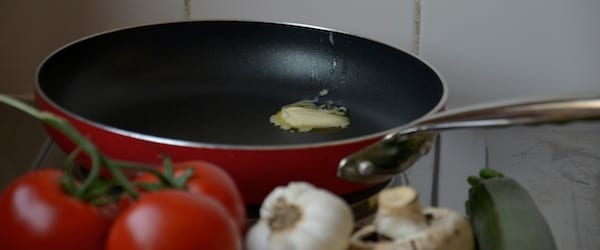
cooking-liquid-nitrogen

Lab Stuff I wish I could use in my kitchen

by in Fun stuff, Lab Hacks
From the Bitesize Bio channel

We recently had a feature from Jode on everyday equipment that you can use in the lab, but what about the other way around?

Do you ever take a look at what you’re doing in the lab and think, “Wow, this would really come in handy at home?” Here are a few of the things I use in the lab that I would love to have in my kitchen:

1. Stir plates and stir bars would be incredibly useful for cooking those dishes that need to be stirred constantly. Can you imagine making risotto on a stir plate? Just start up the spin function, and you won’t have to stand over a hot pot for 30 minutes just to make a tasty dinner.

2. Parafilm works so much better than saran wrap, I’ve often been tempted to “borrow” a roll for sealing food containers to store in my fridge at home.

3. Liquid nitrogen would be invaluable for flash-freezing veggies and meats to store in the freezer. Imagine making popsicles instantly, and never having to wait for the ice cube tray to freeze!

4. De-ionized water from a tap in my kitchen would seriously decrease the number of times I have to run vinegar through the coffee maker to keep it flowing smoothly.

5. Freezer labels that stay stuck in extreme temperature conditions could eliminate the “mystery meal” phenomenon of pulling an unlabeled tupperware out of the freezer and hoping it’s soup.

6. A vortexer would be an essential party asset for mixing drinks, especially if you could also find conical cocktail glasses!

7. Lab timers can time multiple procedures and have louder buzzers than any kitchen timer I’ve found; they would be perfect for busy cooking days.

8. Freezer racks and boxes would make much better use of freezer storage space at home. What if you could get tupperware containers the same size and shape as freezer boxes, and organize them in those vertical metal racks just like in the -80°C freezer in the lab?

9. A 30°C incubator is the ideal tool for making bread. No more guesswork when it comes to rising times for bread; at the optimal temperature for yeast growth, you know exactly what the doubling time is, and thus exactly when the bread is ready to bake.

10. A desktop autoclave could be really handy for sterilizing baby bottles. I’d also use it to sterilize glasses and flatware after an illness, to make sure the same bug doesn’t make an unwelcome reappearance.

What lab items do you wish you could use in “real life”?

Articles in your inbox

Enter your email to be informed when we publish more articles like this on BsB, and also get access to all of these goodies:

  • Free ebooks and audiobooks on the topics that matter to you
  • Access to Member’s-only articles and Videos
  • Advance notice of new webinars and eBooks
  • Access to make comments and ask questions on BsB


What to read next

Join the club: Ten benefits of joining a professional scientific society

If you already spend all day hanging out with other scientists, the last thing you might feel like doing is joining a professional scientific society. With today’s shrinking budgets, you might also start to question whether this line on your CV is worth the membership dues. However, joining societies has many career benefits in addition [...]

Binder CO2 incubator – movie fun

Binder have released a fun movie entitled “Germfellas” to promote their latest CO2 incubator, which comes with inbuilt 180°C sterilization capability. The movie is nicely done and is a great piece of marketing. Take a look if you have the time.

“Loss of Function”

Now for a bit of light entertainment of the biological kind. Wash out your mind – I don’t mean that kind of biological entertainment, but the excellent Loss of Function comic strip by Nate Berkowitz. Loss of Function captures everyday experiences of biology students and researchers with a dry sense of humor that will appeal [...]

A Grad Student, a Postdoc, and a Professor are Walking…

A grad student, a post-doc, and a professor are walking through a city park and they find an antique oil lamp. They rub it and a Genie comes out in a puff of smoke. The Genie says, “I usually only grant three wishes, so I’ll give each of you just one.” “Me first! Me first!” [...]

About the author

Emily Crow

Emily Crow has a PhD in Life Sciences from Northwestern University. She is currently working as an editor for a scientific publishing company. Her many scientific interests include microbiology, parasitology, and prion diseases.

What do you think?

18 comments

  1. from Yannick v.G. on

    The centrifuge of course to concentrate (and resuspend), well, anything.

    99,9% pure ethanol ;)

    Nice and clean proteases to soften meat

  2. from Bonnie on

    We brew beer at my house, so I’d love a home autoclave for sterilizing beer bottles. That way we could pre-sterilize everything and not have to worry about sterilizing them with iodine directly before filling them. I’d probably also do a lot more canning if I had an autoclave.

  3. from Alan Dove on

    When I left lab work a decade ago, I promptly started shopping for kitchen gear that could replicate some of the functions of my – ahem – borrowed lab tools. I haven’t gotten a stir plate or incubator yet, but here are some options for a few of the other items:

    2. Parafilm: Just buy the brand-name plastic wrap instead of the generic stuff. It sticks much better. If you really want Parafilm, though, you can check model-building stores for it. People use it in place of masking tape, apparently.

    3. LN2: This is very hard for “civilians” to get, but a pretty good substitute is dry ice plus denatured alcohol. Big supermarkets often carry dry ice, or you can call local gas/welding supply houses to see if they stock it. Denatured alcohol comes from the hardware store. Mix them, and you’re down to -80C, which is plenty cold for quick-freezing in the kitchen. If you’re willing to settle for -20C, just mix rock salt and regular ice, the way Grandma did to make ice cream.

    4. ddH2O: Available by the gallon in the bottled water aisle of your supermarket.

    5. Freezer labels: Duck tape.

    6. Vortexer: Splurge on a good martini shaker, and make like James Bond.

    7. Lab timers: Good kitchen supply stores carry multi-timer electronic units that you can hear at the other end of the house.

    8. Freezer boxes: Amazon.com. $30 for a box of 12.

    10. Autoclave: Pressure cooker. Two notes, though: some baby bottles won’t survive autoclaving, and it’s way, way beyond overkill for post-illness cleanup. If you just got over something, you’re immune to it and everyone else in your house has already been exposed, so don’t worry about it.

    And now a lab tool I wish I still had: a pipet pump with a supply of 25-mL pipets. Basting a bird or a roast is so much easier with that, but I felt compelled to return it to the lab.

  4. from Martin Gollery on

    I thought about the stir plate idea back in the ’80′s. Can you imagine how cool it would be to have an electric stove with a stirrer on each burner? You couldn’t patent it, though, so other companies could do it too. I am surprised that this was never developed!

  5. from Emily on

    Come to think of it, autoclave gloves would be a great replacement for hot mitts!

  6. from Annie on

    I’d use that autoclave to sterilize preserves, tomato sauce, etc etc :-)

  7. from Annie on

    Oh, I almost forgot: some years back, I got a ceramic mortar & pestle set from a scientific supply company. Way cheaper than any I could find at a kitchen gadget store and it works very well to crush spices, and/or grind a small quantity of crackers into crumbs for recipes!!

  8. from Mike Jones on

    I wish all cooking/recipes/’kitchen traditions’ had the precision and accuracy of science. You know, what if we all used accurate electronic scales, volumetric flasks, pipettes etc to make food – I would be a better cook me thinks

  9. from Kurt on

    Water baths have moved in to the professional kitchens for sous-vide cooking, it might still take some time before they move in to everyday households though.

  10. from Guillaume Carpentier on

    With a 9-months baby at home, I found that wash bottle of water is a perfect device to wet cotton batting. And it is almost impossible to find them in a store ! But a problem is arising because baby want to grab it now ;-)
    Another useful device is Falcon 50 mL to keep cotton swabs dry (when you go to swimming pool, for example).

  11. from Dani on

    I totally agree with the first 6 things on the list. I day dream about having some of those things in my kitchen. And while I considered swiping the parafilm for home use when I was in the lab, it couldn’t in good conscience use products that at some point probably came into contact with biological samples. But speaking of things from the lab that are extremely useful at home, nitrile gloves are awesome! They sell them in bulk at COSTCO and they are WONDERFUL for cleaning. Beakers would also come in handy for making the perfect 10% bleach sol’n.

  12. from Ryan on

    I’ve been pretty tempted a few times to use the lyophilizer to freeze-dry food for backpacking. It would save a lot of money on dehydrated foods, and you could make whatever you wanted.

  13. from on

    The Soxhlet extractor. Not exactly a thing for the molecular folks,but it enchanted me since I stepped into the school lab. Imagine making coffee or green tea that could (literally) kill you, storing the concentrate in an ice tray a freezer (let´s say..uh… – 80°C B-) and then just dissolving one cube in a jar of hot water anytime you wish :-P

  14. from on

    Hi everyone,

    I was very interested to find this thread as I am currently working on a product that is similar to a lab quality stir plate, for home use in the kitchen. It will be called the StirMaster. These items are very expensive to produce, and I haven’t been able to get the retail price down lower than $299. Does anyone have any feedback on this, any comments about how well it might work, etc? Is that price point way too high? I’m concerned about having to use only glass cookware as well, does the stir plate work with stainless steele cookware I wonder? All things to be tested.

    I’m interested in any feedback at all.

  15. from on

    Parafilm and Liquid Nitrogen have been on my list WAY long. What a way to freeze leftovers and pack lunch!

Subscribe to Channels

To receive information about any of our new channels click on the button below.
subscribe to the channel newsletter »

Write for us

Have a short tip, a written
article or a video you'd like
to see published?
write for us »