Performing Pipette Calibration Yourself

It’s necessary to check pipette calibration every few months to ensure accuracy by dispensing the right volumes. This article explains how to perform pipette calibration yourself so you can ensure they are accurate and avoid the wait for their next service.
Read MoreHow to Make the Perfect Agar Plate Every Time
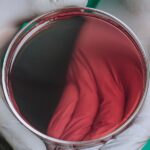
Agar plates are the foundation of many experiments. Make sure your plates are perfect every time with these 8 tips and start your experiment ready for success!
Read MoreA Complete Guide to How Nucleic Acid Extraction Kits Work

Nucleic acid extraction kits are routinely used in today’s molecular biology labs. Read on to learn more about what is inside these black boxes of wonder and how you can get the best results for your preps.
Read MoreWhat is a Biomarker? A Simple Explanation of Their Definitions, Types, and Applications
Biomarkers are fundamental in bioscience, from basic microbiological experiments to clinical studies. This article explains the different types of biomarkers and their application in cancer and disease research.
Read More10 Tips to Organize Your Lab Space for Better Productivity

Do you hate it when you get into the lab ready to get stuff done and then find yourself spending the first 45 minutes of the day hunting for what you need? We do too. So read these 10 tips to organize your lab space for better productivity and spend less time hunting for stuff and more time doing research.
Read MoreHow To Fix Adherent Cells For Microscopy And Imaging
Adherent cell fixation is a crucial step in preparing cells for microscopy and imaging, ensuring that cellular structures are preserved for detailed analysis. Read our 8-step guide on how to effectively fix adherent cells to your microscope slides, including tips on sterilization, coating, and fixation methods, right here.
Read MoreAdvice for Working Alone and Out of Office Hours in the Lab

Working alone in the lab outside of regular hours poses unique challenges and risks. Our guide offers practical advice to ensure your safety and productivity during these solo sessions, emphasizing the importance of preparation, communication, and adherence to safety protocols.
Read MorePersonal Advice on Building Your Professional Network. It Takes a Village

A successful career in science is as much about the people as it is about the results. In this article, get tips from a successful scientist on what constitutes a healthy professional network and learn how to build one. From befriending writers to avoiding expertise mismatches, start working towards your career goals by reading this advice.
Read MoreTips for Using and Maintaining Your Laboratory’s Freeze Dryer

Keep your lab’s freeze dryer running smoothly with our expert tips on care and maintenance, including oil changes and vacuum leak fixes.
Read MoreFunding Opportunities and the Flow of Money in Science

Gain insights into the flow of funding for scientific research. This article breaks down the funding landscape and explains the differences between government, industry, and foundation funding. Learn how navigating these sources can shape your career and accelerate your research endeavors.
Read MoreIsoelectric Focusing: A Simple Way to Enhance Your Protein Separation
Isoelectric focusing is a way of separating proteins and peptides based on their isoelectric point. Read all about this method and its applications right here.
Read MoreHow to Become an Expert at Getting Funded

Become an expert at getting your life science research funded with insights from a seasoned biomedical engineering researcher. Learn how to develop essential skills, such as confidence, independent thinking, consistent reading, effective writing, and embracing criticism in this essential guide.
Read MoreHow Histology Slides Are Prepared
Ever wondered what magic happens to turn your samples into histology slides? Find out the 5 simple steps for histology slide preparation.
Read MoreHow to Write a Killer Research Interest Statement

A strong research interest statement can be the difference between being considered for a position and your application ending up in the bin. Check out these tips on how to make your statement stand out from the crowd.
Read MoreHow to Write a Thoughtful Scientific Discussion Section for Your Paper

Having trouble writing the discussion section for your scientific paper? Help is at hand. Read our do’s and don’ts to help you have your paper polished up in no time.
Read MoreA Brief History of CRISPR-Cas9 Genome-Editing Tools

Learn how the CRISPR prokaryote immune response systems were first discovered and the development of the CRISPR-Cas9 gene-editing tool.
Read MoreWhat Is a Cq (Ct) Value?
Don’t be confused by Ct values! We’ll guide you through what they are, how to calculate them, and troubleshooting issues.
Read MoreThe Essential Guide to In-Cell Westerns
In-cell Westerns are a powerful technique that has enhanced how researchers analyze protein expression levels and signaling pathways within fixed cells. Learn about their primary advantages, applications, and some of the best tech and products to perform them.
Read MoreWhat is the H-index, and Does it Matter?

How do you measure how good you are as a scientist? One way is the h-index. Discover what this is, and learn about the pros and cons of using it to assess your scientific career.
Read MoreA Short History of Cell Biology
Our journey to understanding that single cells are the fundamental units of life traces back to groundbreaking scientific milestones, such as the invention of the microscope, which revealed individual cells, and advancements like the discovery of fluorescent proteins and electron microscopes that have enriched our insights into the intricate structure and function of cells. Dive into a short history of cell biology.
Read MoreChoosing The Right Blood Collection Tubes
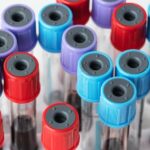
Selecting the right blood collection tubes for your experiment is crucial. But do you know what tubes to use for which type of blood sample? Read on to find the answers.
Read MoreWhat is Volume Electron Microscopy and Should You Use it?
The emergence of Volume Electron Microscopy (vEM) has unlocked new possibilities in biological imaging, enabling us to visualize 3D structures of cells at high resolution. Learn more about this incredible technique in our latest article.
Read MoreA Beginner’s Guide to Hematoxylin and Eosin Staining

Discover what hematoxylin and eosin staining is used for and how it works, in this concise guide.
Read MoreThe Beginner’s Guide to Reading Plasmid Maps

Plasmid maps are a cornerstone of biology, but they are confusing to read for beginners. Our easy guide tells you how to read them, where to look for essential information, and how to avoid common mistakes.
Read More5 Ingredients for the Perfect Protein Purification Buffer

Purified proteins must be kept soluble and active. Discover how to design the perfect protein purification buffer—from additives you can include and their appropriate concentrations to important considerations.
Read MorePlasmid vs. Genomic DNA Extraction: The Difference
Most experiments start with a piece of DNA—either plasmid DNA or genomic DNA. And your downstream uses for it dictate how much you need, what contaminants you can tolerate, and your extraction and purification methods. In this article, we explain the key differences between plasmid and genomic DNA extraction methods.
Read MoreWhat Happens If You Remove the Word ‘because’ from Your Vocabulary?

By removing the word ‘because’ from your vocabulary, you can gain a newfound sense of freedom, creativity, and authority in your decisions. Learn to make choices without justifications and experience the world with a fresh set of eyes.
Read More8 Tips to Improve Your Research Reproducibility

Performing reproducible research is critical in science. This article discusses eight steps you can take to make your research more reproducible.
Read MoreElectron Microscopy Sample Preparation: 10 Pieces of Expert Advice
Do you prepare samples for electron microscopy and want to save time, money, effort, and frustration? This article provides hands-on advice to help you get the best possible data out of your EM experiments.
Read MoreOverhang PCR: Add Missing DNA Sequences Using Primers

Need to add extra nucleotides to your plasmid or other DNA sample? Here’s how to use overhang PCR to easily add extra bases using primers.
Read MoreA Better Alternative to Immortalized Cells: Combining CRISPR and iPSCs
Investigating human diseases and genetic variation is complex, but CRISPR-edited induced pluripotent stem cells present a promising alternative to immortalized cell lines. This article delves into genome editing principles and offers practical steps for optimizing research techniques, ensuring more accurate and ethical studies.
Read MoreHow to Preserve Microorganisms: Store Your Cells Better
We must preserve microorganisms for research continuity and to prevent frustrating delays. Here are several reliable ways to do it.
Read More4 Fixatives for Histology and Cytometry. Perfect Your Preservation
Learn about four fixatives for histology, which one you should pick, and how. Plus, get some top tips for perfect sample preservation.
Read More7 Top Tips to Make the Most of Your Flow Cytometry Training
So you’ve got your flow cytometry training booked and are one step closer to that precious data. Read our 7 top tips on how to get the most from your flow cytometry training.
Read MoreConfocal Laser Scanning Microscopy Explained In 3 Easy Steps

Learn how confocal laser scanning microscopy works, its applications, and why it’s great for samples that are too thin to section.
Read More8 Cell Lysis Methods to Break Cell Walls

We must lyse cells to extract our samples, but which cell lysis method is best for your cells? Read this article to learn about eight excellent methods.
Read MoreA Beginner’s Guide to Protein Structure Prediction
Dive into the world of protein structure science, where AI is revolutionizing the field by offering accurate predictions and free, open-access tools. In this beginner’s guide, we’ll explore these groundbreaking tools, discuss their strengths and weaknesses, and examine the implications for traditional experimental methods like NMR and X-ray crystallography.
Read MoreAn Easy and Reliable Nuclear Extraction Protocol

Here’s your reliable and adaptable nuclear extraction protocol. It contains buffer recipes, explanations of what the reagents do, and top tips to boost yields.
Read MoreGenetic Variants Explained

Genetic variants are critical to fields like evolution, diagnostics, and medicine—but they’re complex. This article breaks them down.
Read MoreMaxam–Gilbert Sequencing: What It Is and 3 Modern Applications
Maxam–Gilbert Sequencing. Slow and obsolete or niche but powerful? Discover how it works and learn about three modern applications.
Read More