Xenopus as a Model for Early Development
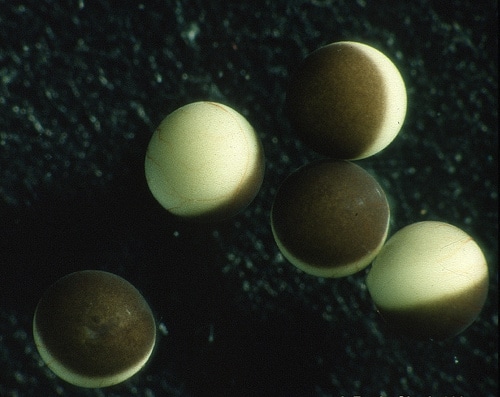
Another popular model organism is the African Clawed Frog, Xenopus laevis, which is extremely useful for studying development and cellular physiology, owing to its particularly large and easy manipulable oocytes and embryo.
The oocytes provide an important expression system – By injecting DNA or mRNA into the oocyte or developing embryo, scientists can study the protein products in a controlled system. This allows rapid functional expression of manipulated DNAs (or mRNA). This is particularly useful in electrophysiology, where the ease of recording from the oocyte makes expression of membrane channels attractive. One challenge of oocyte work is eliminating native proteins that might confound results, such as membrane channels native to the oocyte. Translation of proteins can be blocked or splicing of pre-mRNA can be modified by injection of Morpholino antisense oligos into the oocyte (for distribution throughout the embryo) or early embryo (for distribution only into daughter cells of the injected cell).
Beyond the oocyte, the large size enables easy manipulation and study of the early embryo, including gastrulation in particular. During gastrulation in Xenopus, there are four kinds of cell movement: invagination, involution, convergent extension and epiboly (Click here for animations). Study of these movements has lead to cell fate maps through the sequence of developmental stages.
- Bowes JB, et al. (2008) Xenbase: a Xenopus biology and genomics resource. Nucleic Acids Res., 36(Database issue):D761-D767. DOI:10.1093/nar/gkm826 (Open Access)
- NCBI Xenopus Genome Resources.
- Xenopus Express.
Articles in this series:
Model Organisms in Biomedical Research | Dictyostelium as a Model
X enopus as a Model for Early Development | Worms: Models of Development
2 Comments
Leave a Comment
You must be logged in to post a comment.
Thanks for the link! I had missed that one.
For some great illustrations and movies of Xenopus gastrulation, check out:
https://www.gastrulation.org